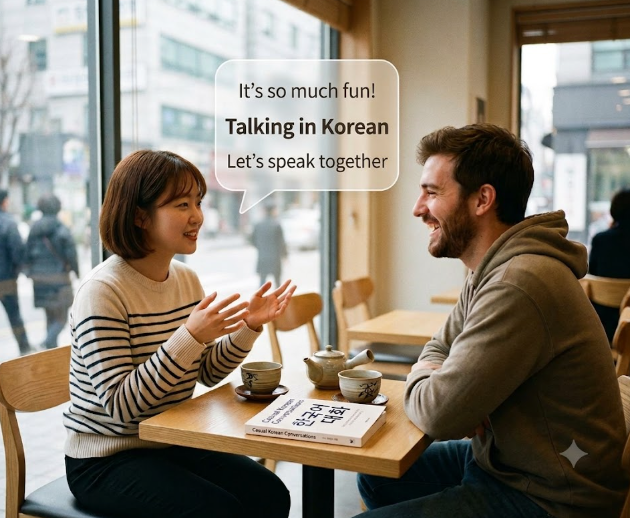
Mastering the art of Korean Small Talk can be challenging, but the secret lies in a concept called ‘Tikita-ka’

| 한국어 | 영어 해석 |
| 분명히 처음 만난 사이인데 원래 알던 사이인 것처럼 자연스럽게 이야기하고 싶다면 디테일을 기억하세요. | If you want to talk naturally as if you’ve known each other even if you’ve just met, remember the details. |
| 티키타카가 되려면 상대방의 이야기를 듣고 내 이야기를 꺼내야 하는데요. 하나씩 알려드릴께요. | To have a back-and-forth conversation, you need to listen to the other person and then bring up your own story. I’ll let you know one by one. |
| 첫 번째, 상대방의 디테일 되묻기. | First, ask back about the other person’s details. |
| 상대방이 “저 요즘 헬스에 빠졌어요”라고 한다면, “헬스는 꾸준히 하는 게 좋다던데 얼마나 하세요?”, “와 처음에 어떻게 재미를 붙이게 되셨어요?”처럼 | If they say, “I’m into working out these days,” you can ask, “They say it’s good to be consistent, how often do you go?” or “Wow, how did you get interested in it initially?” |
| 내가 그 주제에 관심이 크게 없더라도 사소한 디테일을 묻게 되면 대화가 자연스럽게 흘러갈 수 있습니다. | Even if you’re not very interested in the topic, asking about small details can make the conversation flow naturally. |
| 두 번째, 나의 디테일을 꺼내기. | Second, bring up your own details. |
| 나의 이야기를 시작할 때는 누구나 할 수 있는 평범한 주제보다는 나에게만 일어난 사소한 사건을 꺼내 보세요. | When starting your story, try to bring up a minor incident that happened only to you rather than an ordinary topic anyone can talk about. |
| 예를 들어서 “아 월요일 출근하는 거 너무 힘드네요”가 아니라, | For example, instead of saying, “Monday mornings are so tough,” |
| “저는 월요일 출근할 때마다 너무 힘들어서 아침마다 아르기닌을 꼭 챙겨 먹어요. 오늘 영양제 드셨어요?”처럼 | you could say, “I find it so hard to go to work on Mondays, so I make sure to take arginine every morning. Did you take your vitamins today?” |
| 나의 디테일, 약간의 TMI 더해서 상대방의 디테일까지 물어보면 좋습니다. | It’s good to add a bit of your own TMI (Too Much Information) and then ask about the other person’s details. |
| 이 스몰토크 꿀팁을 왠지 소개팅에서 써먹으면 좋겠죠. | It would be great to use these small talk tips on a blind date, right? |
The Essence of “Tikita-ka”: More Than Just Small Talk
“Tikita-ka” is more than just a technique for exchanging words.
It’s a process of emotional connection, confirming that you and the other person are on the same wavelength.
Of course,
it’s true that “Tikita-ka” works much better when there is a mutual spark or interest.
But looking at it from another angle:
even if the relationship feels a bit awkward, using this “Tikita-ka” skill to break the ice can work like magic, sparking interest where there was none before.
Listening carefully to what the other person says and picking up on small details to ask follow-up questions is the most sophisticated way to say,
“I’m genuinely interested in what you have to say.”
Even for an awkward silence, a bit of “ping-pong” conversation can change the whole vibe, making them think, “Wow, I really click with this person!”
Remember!
More important than perfect grammar or sentences is your sincere effort to connect by reacting to them and sharing your own stories.
Start your next Korean small talk today with these “Tikita-ka” skills!
| 한국어 문장 (Korean) | 영어 문장 (English) |
| 누구나 할 수 있는 평범한 주제보다는/ 나에게만 일어난 사소한 사건을 꺼내 보세요. | Instead of sticking to ordinary topics that anyone can talk about, try sharing a small, personal incident that happened only to you. |
| 단순히 “날씨가 덥네요”라고 말하기보다는 / 오늘 아침에 겪은 구체적인 상황을 말해 보세요. | Instead of just saying “It’s so hot today,” try sharing a specific situation you experienced this morning. |
| 딱딱하게 사실 정보만 전달하기보다는/ 나만의 감정이 섞인 솔직한 이야기를 들려주세요. | Instead of dryly stating facts, try telling an honest story mixed with your own personal feelings. |
| 상대에게 뻔한 질문을 던지기보다는/ 아까 나눈 대화 속에서 디테일을 찾아 질문하세요. | Instead of asking generic questions, try finding a detail from your earlier conversation and asking about that. |
| 긴장해서 완벽한 문장을 만들려 하기보다는 / 서툴더라도 상대방의 반응에 집중하며 대화를 이어가세요. | Instead of worrying about making perfect sentences, try to focus on the other person’s reaction and keep the conversation flowing. |
“Now it’s your turn!
Try to use these tips in your next conversation.
Instead of sticking to generic topics, share one small, personal story of your own.
You can also practice passing the conversational lead by saying something like, ‘Instead of me going,
I think it’d be better if you went.’ It’s the perfect way to build that ‘Tikita-ka’ energy!”