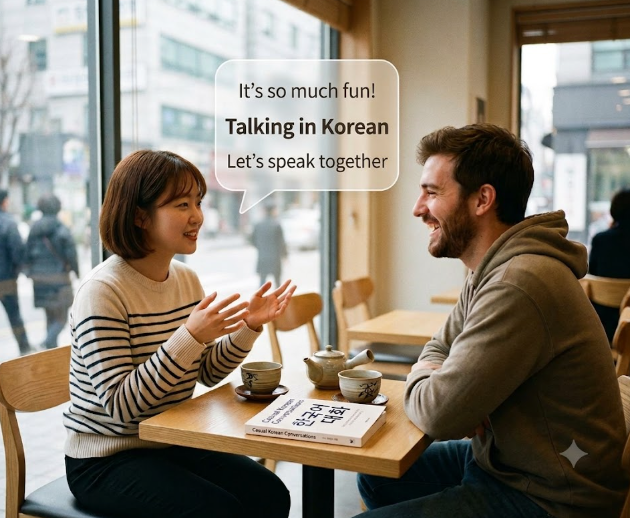
How to sound natural in Korean
Start speaking today!
“This is an AI-generated video, so you might notice it looks a bit… well, let’s just say a bit awkward! It’s not perfect, but it’s a fun way to hear how we actually speak in real life. Enjoy the quirks!”

| 한국어 (발음 기호) Korean (pronunciation symbol) | 영어 해석 English interpretation |
| 여보세요, 어쩐 일이야? (Yeoboseyo, eojjeon iriya?) | Hello, what’s up? |
| 어우, 오랜만이야. 다름이 아니라, 너네 남편 회사 그만뒀니? (Eou, oraenmaniya. Dareumi anira, neone nampyeon hoesa geumandwotni?) | Oh, long time no see. It’s not for any other reason but did your husband quit his job? |
| 우리 남편? 아니, 회사 잘 다니고 있는데. 왜? (Uri nampyeon? Ani, hoesa jal danigo inneunde. Wae?) | My husband? No, he’s working well. Why? |
| 아니, 내가 어제 우리 신랑이랑 집 앞 치킨집에 갔는데, 너네 신랑이 일하고 있더라고. (Ani, naega eoje uri sillang-irang jib ap chikin-jibe ganneunde, neone sillang-i ilhago itdeorago.) | Well, I went to the fried chicken place in front of my house with my husband yesterday, and I saw your husband working there. |
| 말하지 말랬는데 어찌 그러니… (Malhaji malraetneunde eojji geureoni…) | He told me not to talk, but how. |
| 나한테는 새로운 프로젝트 들어간다고 매일 늦는다고 하던데… (Nahanteneun saeroun peurojekteu deureogandago maeil neutneundago hadeonde…) | He told me he was working on a new project and was late every day… |
| 어우 예, 난 몰라. 아무튼 내가 말한 거 아니다. 끊을게, 또 연락하자. (Eou ye, nan molla. Amuteun naega malhan geo anida. Kkeuneulge, tto yeollakhaja.) | Anyway, I don’t know. Just so you know, it wasn’t me who told you. I have to go, let’s talk later. |
| 어, 그래 들어가. (Eo, geurae deureoga.) | Okay, see you. |
| 여보 왔어? 오늘도 수고했어. (Yeobo wasseo? Oneuldo sugohaesseo.) | You’re home! You worked hard today. (=“It’s been a long day, hasn’t it?”) |
| 응, 여보. 배고프지? 치킨 사 왔어. (Eung, yeobo. Baegopeuji? Chikin sawasseo.) | Yeah, honey. Are you hungry? I bought some fried chicken. |
| 치킨 사 왔네. 오늘도 치킨집 회식? (Chikin sawanne. Oneuldo chikin-jip hoesik?) | You bought chicken. Is it a company dinner at the chicken shop again? |
| 응, 또 치킨이야. 그래도 맛있잖아. (Eung, tto chikiniya. Geuraedo masitjana.) | Yeah, it’s chicken again. But it’s delicious, isn’t it? |
| 요즘 새로 들어간 프로젝트 때문에 야근하다 보니 자주 먹게 되네. (Yojeum saero deureogan peurojekteu ttaemune yageunhada boni jaju meokge doene.) | Since I’m working late for my new project, I end up eating it often. |
| 그래도 자기랑 먹으려고 /내가 포장해 왔어. (Geuraedo jagirang meongneuryeogo naega pojanghae wasseo.) | But I packed it up so/ I could eat it with you. |
| 정말 고마워. 맛있게 먹자. (Jeongmal gomawo. Masitge meokja.) | Thank you so much. Let’s eat. |
| 늘 나 생각해 주고 챙겨 줘서 고마워요, 여보. (Neul na saenggakae jugo chaenggyeo jwoseo gomawoyo, yeobo.) | Thank you for always thinking of me and taking care of me, honey. |
| 당연하지! 나한테는 당신이 1번인 걸. 내가 우리 집 가장이잖아. 나만 믿어. (Dangyeonhaji! Nahanteneun dangsini ilbeoningeol. Naega uri jip gajang-ijana. Naman mideo.) | Of course! You’re my number one. I’m the head of this household, you know. Just trust me. |
Noun (Meaning)
치킨집 (Fried chicken place)
남편 (Husband)
회사 (Company)
프로젝트 (Project)
회식 (Company dinner)
가장 (Head of household)
포장 (Takeout / To-go)
야근 (Working overtime / Night shift)
[Translation Tip: “다름이 아니라”]
“In Korean, we use ‘다름이 아니라’ to emphasize why we are bringing up a topic. It’s like saying, ‘I’m not mentioning this out of the blue—I have a specific reason.’ It’s a great way to show you’re focused and mean business!”
아니
“Spot the difference! The first ‘아니’ means ‘No,’ but the second one is a unique conversational filler derived from ‘다름이 아니라.’ We use this second ‘아니’ constantly to bridge thoughts or introduce a point. It’s one of those tiny habits that truly makes your Korean sound much more natural and native.”
| Korean Expression | English Equivalent | Context |
| 잘 가 (Jal-ga) | “Goodbye” or “Take care” | Used when someone is actually leaving your presence. |
| 들어가 (Deureoga) | “Get home safe” or “Take care” | Used as a polite, caring way to end a phone call or a meeting. |
Literal vs. Cultural Meaning
- English: “Go inside.” (Literal)
- Korean: “들어가” (Cultural/Casual)
- Explanation: In Korean culture, when ending a phone call or saying goodbye, we say “들어가” (Go inside) to imply “Take care on your way back home” or “Have a safe rest.” It’s an idiom for “Goodbye.”
“Don’t stress about memorizing every single word. Language isn’t about perfect matches—it’s about the feel and the situation. Focus on the flow of the conversation, and you’ll naturally pick up the expressions that matter most. If a phrase is essential, you’ll see it again in the next lesson, so just enjoy the journey!”
“What was the most difficult phrase in this dialogue? Let me know in the comments!”