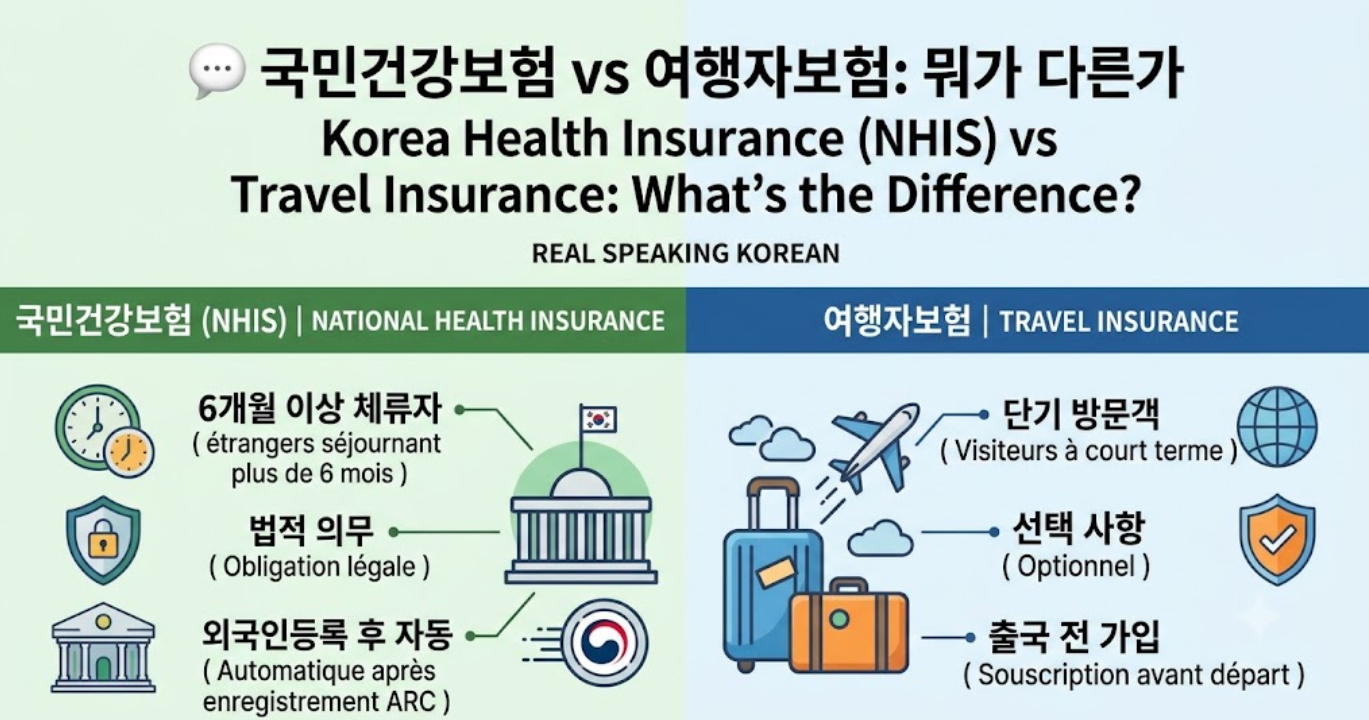
💬 국민건강보험 vs 여행자보험: 뭐가 다른가
Korea Health Insurance (NHIS) vs Travel Insurance: What’s the Difference?
⚠️ 안내: 이 글은 일반 정보 제공 목적으로 작성되었으며, 법률·재정 자문이 아닙니다. 정확한 가입 조건과 보장 내용은 국민건강보험공단(NHIS)이나 가입하려는 보험사에서 직접 확인하세요.
Disclaimer: This article is for general informational purposes only and is not legal or financial advice. Confirm exact eligibility and coverage details with NHIS or the insurer directly.
“국민건강보험”이랑 “여행자보험”, 둘 다 한국에서 아플 때 도움을 주는 건 맞는데, 사실 완전히 다른 제도예요. 이 둘을 헷갈리면 필요 없는 걸 중복으로 가입하거나, 반대로 꼭 필요한 걸 놓칠 수 있어요.
Both “National Health Insurance” and “travel insurance” help you when you’re sick in Korea, but they’re actually completely different systems. Mixing them up can mean paying for something you don’t need — or missing something you actually do.
한눈에 비교하기
At a Glance
| 항목 | 국민건강보험 (NHIS) | 여행자보험 |
|---|---|---|
| 대상 | 6개월 이상 체류하는 외국인 (일부 비자는 즉시) | 단기 방문객, 여행객 |
| 가입 성격 | 법적 의무 | 선택 |
| 가입 시점 | 외국인등록 후 자동 | 출국 전, 본국에서 |
| 보장 기간 | 체류 기간 내내 지속 | 여행 일정에 맞춰 정한 기간만 |
| 보장 범위 | 진료·검진·치료비 일부 | 의료비, 휴대품 손해, 항공편 지연, 배상책임 등 |
| 비용 구조 | 매달 보험료 납부 | 여행 기간 기준 일시납 |
| 가격 고정 여부 | 정책에 따라 변동 (예: 월 약 12만 원대) | 나이·기간·보장범위에 따라 다름, 고정가 없음 |
| 국내/해외 여부 | 한국 내 체류자 대상 | 한국 방문 여행자 대상 |
1. 왜 헷갈리기 쉬운가
Why These Get Confused So Easily
둘 다 “아플 때 도움을 준다”는 점은 같아서, 이름만 보면 비슷하게 느껴질 수 있어요. 하지만 국민건강보험은 한국에 사는 사람을 위한 사회보장제도이고, 여행자보험은 짧은 방문을 위한 민간 보험 상품이에요.
Both help you when you’re sick, so the names can sound similar. But NHIS is a social security system for people living in Korea, while travel insurance is a private insurance product for short visits.
가장 큰 차이는 ‘의무냐 선택이냐’예요. 국민건강보험은 조건에 맞으면 자동으로, 법적으로 가입돼요. 여행자보험은 안 들어도 법적으로 문제가 되지는 않지만, 사고나 응급 상황이 생기면 전액 본인 부담이 될 수 있어요.
The biggest difference is whether it’s mandatory or optional. NHIS enrolls you automatically and legally once you meet the conditions. Travel insurance isn’t legally required, but skipping it can mean paying the full cost yourself in an emergency.
2. 체류 기간에 따라 달라지는 선택
The Right Choice Depends on Your Length of Stay
단기 방문(관광, 출장): 여행자보험만으로 충분해요. 국민건강보험 대상이 아니에요.
Short-Term Visits (tourism, business trips): Travel insurance alone is enough. You’re not eligible for NHIS.
6개월 이상 체류(유학, 취업, 결혼 등): 국민건강보험 의무 가입 대상이 돼요. 다만 등록까지 시간이 걸리니, 그 사이를 채워줄 여행자보험이나 사설 보험이 필요해요.
Staying 6 Months or More (study, work, marriage, etc.): You become subject to mandatory NHIS enrollment. But since registration takes time, you’ll need travel or private insurance to cover the gap in between.
체류 기간이 애매한 경우: 처음엔 단기로 왔다가 장기 비자로 전환하는 경우도 있어요. 이럴 땐 전환 시점부터 국민건강보험 대상이 될 수 있으니 미리 확인해두는 게 좋아요.
When Your Stay Length Is Uncertain: Some people arrive short-term and later switch to a long-term visa. In that case, you may become subject to NHIS from the point of the switch, so it’s worth checking in advance.
3. 실제로 겹치는 상황
Situations Where They Actually Overlap
국민건강보험 가입 전 공백 기간: 외국인등록증이 나오기 전까지는 국민건강보험이 적용 안 돼요. 이 기간엔 여행자보험이나 사설 보험으로 공백을 메워야 해요.
The Gap Before NHIS Starts: NHIS doesn’t apply until your Alien Registration Card is issued. During this period, travel or private insurance fills the gap.
국민건강보험이 있어도 부족한 부분: 국민건강보험이 있어도 본인 부담금이 남거나, 일부 비급여 항목은 보장이 안 될 수 있어요. 이런 부분을 보완하려고 사설 실손보험을 추가로 드는 사람도 많아요.
What NHIS Doesn’t Fully Cover: Even with NHIS, some out-of-pocket costs remain, and certain non-covered items may not be included. Many people add private reimbursement insurance to cover these gaps.
청구 방식은 어떻게 다른가
How the Claim Process Differs
국민건강보험: 따로 청구할 필요가 없어요. 외국인등록증만 병원에 보여주면, 진료비에서 본인부담금만 그 자리에서 바로 계산돼서 나와요. 한국 국민과 똑같은 방식이에요.
NHIS: There’s no separate claim to file. Simply show your Alien Registration Card at the hospital, and your bill is automatically reduced to just your portion on the spot — the same way it works for Korean citizens.
여행자보험: 대부분 ‘먼저 내고 나중에 청구하는’ 방식이에요. 병원비를 본인이 전액 결제한 다음, 영수증과 진단서 같은 서류를 모아서 보험사에 제출해야 보험금을 받을 수 있어요.
Travel Insurance: Most plans work on a “pay first, claim later” basis. You pay the full hospital bill yourself, then submit documents like receipts and a medical certificate to the insurer to receive reimbursement.
이 차이가 왜 중요한가
Why This Difference Matters
국민건강보험은 그 자리에서 끝나는 반면, 여행자보험은 사고 이후에도 서류를 챙기고 제출하는 절차가 남아있어요. 그래서 여행자보험을 이용할 때는 병원에서 나오기 전에 필요한 서류를 미리 다 챙기는 습관이 중요해요.
NHIS is settled on the spot, while travel insurance leaves you with steps to complete after the fact — gathering and submitting documents. That’s why, with travel insurance, it’s important to make a habit of collecting all necessary documents before you even leave the hospital.
목돈이 먼저 나가는 걸 감당할 수 있는지도 미리 생각해봐야 해요. 여행자보험은 결국 나중에 돌려받는 구조라서, 그 사이의 자금 부담을 감안하고 있어야 해요.
You should also think in advance about whether you can handle paying a large amount upfront. Since travel insurance ultimately reimburses you later, you need to be prepared for that temporary financial burden in between.
📋 청구 서류 비교
Claim Documents Comparison
| 항목 | 국민건강보험 | 여행자보험 |
|---|---|---|
| 필요 서류 | 외국인등록증만 제시 | 영수증, 진료비 세부내역서, 진단서 |
| 청구 시점 | 즉시 적용 (청구 불필요) | 사후 제출 |
| 자금 부담 | 본인부담금만 그 자리에서 결제 | 전액 선결제 후 나중에 환급 |
📌 핵심 표현 정리
Key Expressions Summary
| 한국어 | 영어 뜻 |
|---|---|
| 국민건강보험 (NHIS) | National Health Insurance |
| 여행자보험 | Travel insurance |
| 의무 가입 | Mandatory enrollment |
| 공백 기간 | Coverage gap period |
| 본인 부담금 | Out-of-pocket payment |
| 비급여 | Not covered under national insurance |
| 사설 보험 / 실손보험 | Private insurance / reimbursement insurance |
❓ 자주 묻는 질문
FAQ
Q1. 국민건강보험이 있으면 여행자보험은 필요 없나요?
If I have NHIS, do I still need travel insurance?
국민건강보험 적용 전까지는 여행자보험이나 사설 보험이 필요해요. 또, 국민건강보험 가입 후에도 휴대품 손해나 배상책임 같은 항목은 국민건강보험에 없어서, 필요하면 별도로 챙겨야 해요.
You’ll need travel or private insurance before NHIS coverage begins. Even after enrolling in NHIS, items like baggage loss or personal liability aren’t covered, so you may want separate coverage for those.
Q2. 여행자보험만 있으면 장기체류도 괜찮나요?
Is travel insurance alone enough for a long-term stay?
아니요. 여행자보험은 짧은 기간을 기준으로 설계돼서, 6개월 이상 체류하면 국민건강보험 의무 가입 대상이 되고 그쪽으로 넘어가야 해요.
No. Travel insurance is designed for short periods, so once you stay 6 months or more, you become subject to mandatory NHIS enrollment and need to transition to it.
Q3. 둘 다 가입하면 중복 보장 아닌가요?
If I have both, is that duplicate coverage?
완전히 겹치진 않아요. 시기(공백 기간 vs 체류 기간)와 항목(의료비 vs 휴대품·배상책임)이 달라서, 겹치지 않게 시기별로 연결해서 쓰는 게 핵심이에요.
Not entirely. Since the timing (gap period vs. stay period) and the items covered (medical costs vs. baggage/liability) differ, the key is connecting them by timing rather than treating them as duplicates.
결국 이 둘은 경쟁 관계가 아니라 서로 다른 시기를 채워주는 파트너예요. 국민건강보험은 한국에서의 삶을 위한 제도이고, 여행자보험은 그 삶이 시작되기 전이나 짧은 방문을 위한 안전망이에요.
In the end, these two aren’t competing options — they’re partners covering different periods. NHIS is a system for life in Korea, while travel insurance is a safety net for before that life begins, or for a short visit.