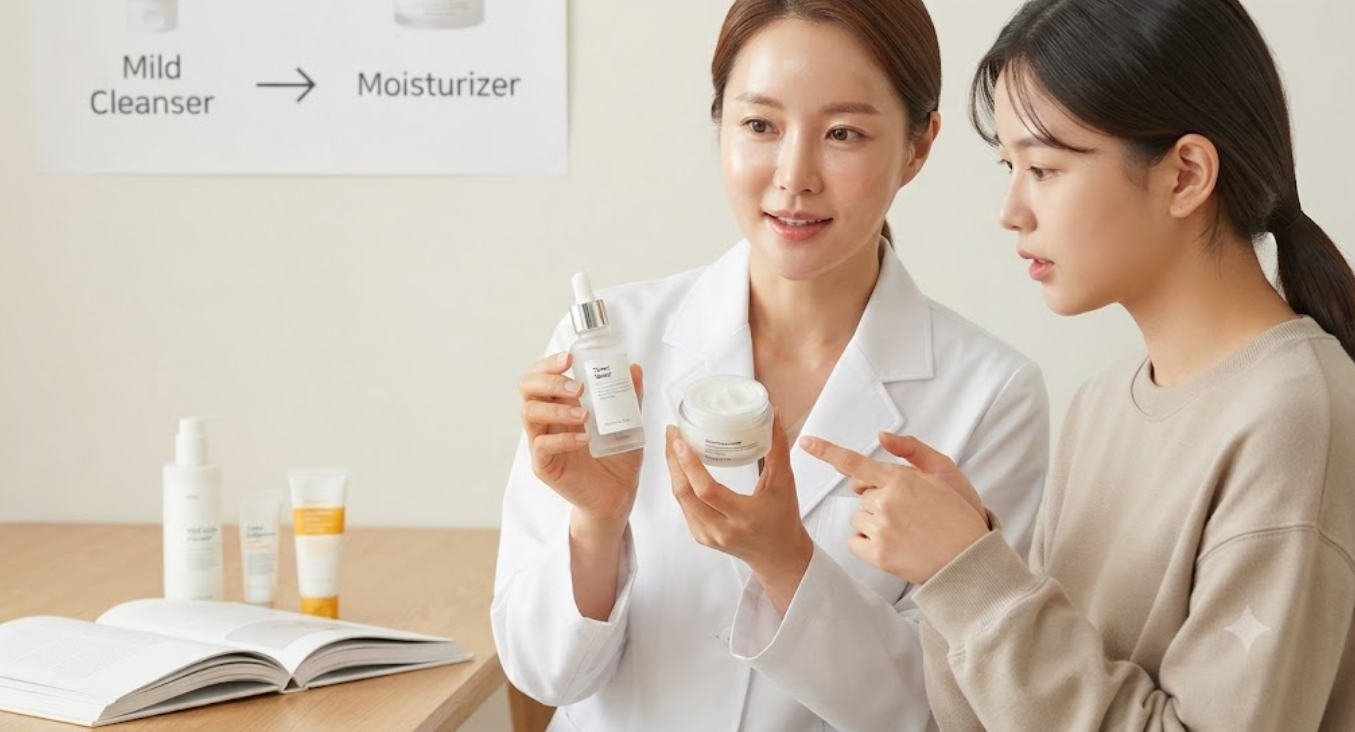
💬 Korean Skincare Konglish: What People Actually Say in Korea
한국어 학습자가 한국 드라마나 유튜브를 보다 보면, “스킨 발랐어?”, “로션 좀 발라”, “선크림 꼭 챙겨!” 같은 말을 자주 듣게 돼요. 근데 영어 사전을 찾아보면 뜻이 좀 다르게 나와서 혼란스러울 수 있어요.
When learning Korean through K-dramas or YouTube, you’ll often hear phrases like “스킨 발랐어?” (Did you put on skin?), “로션 좀 발라” (Put on some lotion), or “선크림 꼭 챙겨!” (Don’t forget your sun cream!). But if you look these up in an English dictionary, the meanings don’t quite match up — which can be confusing.
이 글에서는 한국에서 실제로 쓰는 스킨케어 표현(콩글리시)과, 영어권에서 자연스럽게 쓰는 표현을 나란히 비교해서 정리했어요. 2026년 K-뷰티 트렌드까지 함께 담았어요.
This article lines up the skincare expressions actually used in Korea (Konglish) side by side with the natural English equivalents used elsewhere — plus a look at 2026 K-beauty trends.
1. Basic Skincare Routine, in Korean
한국의 기본 스킨케어 순서는 대략 이래요: 세안(클렌징) → 스킨(토너) → 에센스 → 세럼/앰플 → 로션/크림 → 선크림. 이걸 “기초 루틴”이라고 부르고, 아침저녁으로 하는 사람이 많아요.
The basic Korean skincare order goes roughly: cleansing → toner (“skin”) → essence → serum/ampoule → lotion/cream → sun cream. This is called the “basic routine,” and many people do it both morning and night.
“세안했어?” “클렌징 잘 해줘야 피부가 좋아져.”
“Did you cleanse?” “You have to cleanse properly for your skin to look good.”
“스킨 발라.” “토너 먼저 찍어.”
“Put on skin (toner).” “Pat on the toner first.”
“에센스 한 방울이면 충분해.”
“One drop of essence is enough.”
“세럼 꼼꼼히 발라.” “앰플은 한두 방울만.”
“Apply the serum thoroughly.” “Just one or two drops of ampoule.”
“로션 발라줘.” “크림까지 발라야 보습이 돼.”
“Put on lotion for me.” “You need the cream too for it to actually moisturize.”
“선크림 꼭 발라.” “외출할 땐 자외선 차단제 필수야.”
“Make sure to put on sun cream.” “Sunscreen is a must whenever you go outside.”
2. Konglish vs. Natural English
| Konglish (Korean usage) | Natural English | Note |
|---|---|---|
| 스킨 (skin) | toner | Applied right after cleansing. “Toner” is the accurate English term, but “스킨” is fully standard in Korean. |
| 로션 (lotion) | moisturizer / face lotion | In Korean, “로션” covers everything from watery lotions to thicker creams. |
| 선크림 (sun cream) | sunscreen / sun cream | “Sunscreen” is more common in English, but “선크림” is far more common in Korean daily speech. |
| 아이크림 (eye cream) | eye cream | Used almost identically in both languages. |
| 에센스 (essence) | essence / serum | Korean “에센스” often overlaps with what English speakers would just call “serum.” |
| 세럼 (serum) | serum | Nearly identical usage in both languages. |
| 앰플 (ampoule) | ampoule | A more concentrated product than serum; heavily emphasized in Korean cosmetics marketing. |
| 미스트 (mist) | facial mist | Used similarly in both languages. |
| 팩 (pack) | sheet mask / mask pack | In Korean, “팩” usually refers specifically to a sheet mask. |
| 슬리핑 팩 (sleeping pack) | sleeping mask / night cream | A cream or mask you apply and leave on overnight. |
3. More Konglish Beauty Terms Worth Knowing
| Konglish (Korean usage) | Natural English | Note |
|---|---|---|
| 클렌징 오일 (cleansing oil) | cleansing oil / oil cleanser | Used to dissolve sunscreen and makeup before a water-based cleanser. |
| 쿠션 (cushion) | cushion foundation | A Korean-invented format: liquid foundation soaked into a sponge inside a compact. |
| 팩트 (pact) | pressed powder / compact | From “compact” — refers to a pressed powder case, not a written agreement. |
| 틴트 (tint) | lip tint / lip stain | A lightweight, long-lasting lip color, distinct from a full-coverage lipstick. |
| 톤업 크림 (tone-up cream) | color-correcting moisturizer | A moisturizer with a brightening tint, popular as a base before makeup. |
| 필링젤 (peeling gel) | exfoliating gel | A gentle gel exfoliant that rolls dead skin off; different from a scrub. |
| 선스틱 (sun stick) | sunscreen stick | A solid, twist-up sunscreen applicator, easy to reapply over makeup. |
| 수분크림 (moisture cream) | hydrating cream | Emphasizes water-based hydration rather than heavier oil-based moisture. |
중요 포인트: “스킨”, “로션”, “선크림” 같은 표현은 한국에서 완전히 정착된 표현이라, 한국 사람이랑 대화할 땐 그대로 써도 돼요. 다만 영어권 친구한테 설명할 땐 “toner”, “moisturizer”, “sunscreen”으로 바꿔서 말하는 게 자연스러워요.
Key Point: Expressions like “스킨,” “로션,” and “선크림” are fully established in Korean, so you can use them as-is when talking with Koreans. But when explaining to an English-speaking friend, switching to “toner,” “moisturizer,” and “sunscreen” sounds much more natural.
4. 2026 K-Beauty Trends to Know
글래스 스킨: 투명하고 광이 나는, 마치 유리처럼 매끈한 피부를 뜻해요 — 두꺼운 화장보다 촉촉한 피부 자체를 강조하는 트렌드예요.
Glass skin: refers to clear, dewy, glass-like smooth skin — a trend that emphasizes hydrated skin itself over heavy makeup.
슬러깅: 자기 전 마지막 단계에서 바세린 같은 무거운 제품을 얇게 발라 / 수분이 밤새 날아가지 않게 막아주는 방법이에요.
Slugging: applying a thin layer of a heavy occlusive product like petroleum jelly as the last step before bed, / to seal in moisture overnight.
10단계 루틴: 클렌저 → 스킨 → 에센스 → 앰플 → 세럼 → 팩 → 아이크림 → 로션 → 선크림 순서로 이어지는 / 한국 스킨케어의 상징적인 루틴이에요. 다만 매일 10단계를 다 하는 사람은 많지 않고, 필요에 따라 골라서 써요.
The 10-step routine: cleanser → toner → essence → ampoule → serum → mask → eye cream → lotion → sunscreen, / the routine Korean skincare is famous for. In practice, though, most people don’t do all 10 steps daily — they pick and choose based on their needs.
친환경 포장: 비건, 크루얼티 프리, 제로 웨이스트 포장을 내세우는 브랜드가 / 2026년 들어 눈에 띄게 늘었어요.
Eco-friendly packaging: brands highlighting vegan, cruelty-free, and zero-waste packaging / have visibly grown in number heading into 2026.
주요 K-뷰티 브랜드: 이니스프리(자연주의), 라네즈(수분 케어), 코스알엑스(저자극 트러블 케어), 설화수(고급 한방 스킨케어), 에뛰드하우스(가성비, 귀여운 패키징) 정도가 / 해외 학습자들 사이에서 특히 자주 언급돼요.
Popular K-beauty brands: Innisfree (nature-focused), Laneige (hydration care), COSRX (gentle, trouble-prone skin care), Sulwhasoo (premium herbal skincare), and Etude House (affordable, cute packaging) / come up especially often among learners abroad.
5. Real Dialogue: Talking to a Korean Friend vs. an English-Speaking Friend
한국 친구와의 대화 (콩글리시 그대로):
With a Korean Friend (Konglish As-Is):
A: 오늘 스킨케어 했어? B: 응, 세안하고 스킨이랑 에센스, 로션까지 발랐어. A: 선크림은? B: 아, 깜빡했다! 지금 발라야지.
A: Did you do your skincare today? B: Yeah, I cleansed and put on skin, essence, and lotion. A: What about sun cream? B: Oh, I forgot! I’ll put it on now.
영어권 친구와의 대화 (자연스러운 영어로):
With an English-Speaking Friend (Natural English):
A: Did you do your skincare today? B: Yeah, I cleansed and used toner, essence, and moisturizer. A: Did you put on sunscreen? B: Oh, I forgot! I’ll put it on now.
(Same conversation, naturally translated for an English-speaking listener.)
6. Tips for Korean Learners
한국 화장품 매장에서 쇼핑할 때: “스킨이랑 로션이랑 선크림 세트로 주실래요?”, “건성 피부용 에센스 있어요?”, “세럼이랑 앰플이랑 뭐가 다른가요?” — 이 표현들을 그대로 쓰면 돼요. 한국 직원들은 이 표현에 매우 익숙해요.
Shopping at a Korean Cosmetics Store: “Can I get skin, lotion, and sun cream as a set?”, “Do you have an essence for dry skin?”, “What’s the difference between serum and ampoule?” — you can use these exact phrases. Korean staff are very used to these terms.
영어권 친구에게 설명할 때: “In Korea, we call toner ‘skin’.” “We say ‘lotion’ for most face moisturizers.” “‘Sun cream’ is common in Korea, but I know ‘sunscreen’ is more natural in English.”
Explaining to an English-Speaking Friend: These lines help you convey the language difference clearly.
중요한 뉘앙스: “스킨”은 한국에서만 “toner”라는 뜻으로 쓰여요. 영어권 사람한테 “I use skin”이라고 하면 오해할 수 있어요. “로션”은 한국에서 페이스 로션을 뜻하지만, 영어권에선 보통 바디로션을 먼저 떠올려요.
Important Nuance: “스킨” only means “toner” within Korean. Saying “I use skin” to an English speaker could cause confusion. “로션” means face lotion in Korean, but English speakers usually think of body lotion first.
✅ Quick Practice
Explain to an English-speaking friend what a “cushion” is and how it’s different from regular foundation.
Example: “A cushion is liquid foundation soaked into a sponge — you just pat it on instead of using a brush.”
Describe your evening skincare routine in Korean, using at least one term from this post (스킨, 팩, 쿠션, 틴트, etc).
Example: “자기 전에 클렌징 오일로 지우고, 스킨이랑 세럼 바르고, 마지막에 슬러깅했어.”
Translate your answer from #1 into natural English, the way you’d explain it to a friend who doesn’t speak Korean.
Example: “Before bed, I removed my makeup with cleansing oil, put on toner and serum, and finished with slugging.”
Ask a Korean friend for a product recommendation, using Konglish naturally.
Example: “건성 피부에 좋은 수분크림 추천해 줄 수 있어?”
Frequently Asked Questions
“스킨”이 진짜 영어로 “skin”이라는 뜻이에요? / 아니요, 한국에서 “스킨”은 “toner”를 뜻해요 — / 영어의 “skin”(피부)이랑 헷갈리기 쉬운 대표적인 콩글리시예요.
Does “스킨” really mean “skin” in English? / No, in Korean “스킨” means “toner” — / it’s one of the most commonly confused Konglish terms with the English word “skin.”
쿠션이랑 파운데이션은 뭐가 달라요? / 쿠션은 스펀지에 액체 파운데이션이 스며든 콤팩트 형태라서, / 손이나 브러시 없이 스펀지로 바로 두드려 바를 수 있어요.
What’s the difference between a cushion and regular foundation? / A cushion is liquid foundation soaked into a sponge inside a compact, / so you can pat it on directly with the sponge, no brush or hands needed.
10단계 루틴을 꼭 매일 다 해야 하나요? / 아니요, 대부분의 한국 사람도 그날 피부 상태에 따라 / 필요한 단계만 골라서 해요.
Do I really need to do all 10 steps every day? / No, most Koreans themselves / pick and choose steps based on how their skin feels that day.
📌 Key Expressions Summary
| 한국어 | 영어 뜻 |
|---|---|
| 콩글리시 | Konglish (Korean-style English) |
| 기초 루틴 | Basic skincare routine |
| 세안 | Cleansing |
| 보습 | Moisturizing |
| 건성 피부 | Dry skin |
| 자외선 차단제 | UV protection product |
| 쿠션 | Cushion foundation |
| 글래스 스킨 | Glass skin (dewy, clear skin trend) |
📚 Review Quiz: Skincare Konglish
Part 1. Vocabulary Matching
Match each Konglish term to its natural English meaning.
- 스킨
- 팩
- 쿠션
- 앰플
- 톤업 크림
A. Sheet mask B. Toner C. Color-correcting moisturizer D. Cushion foundation E. A concentrated, more potent serum
Part 2. Grammar Fill-in-the-Blank
- 외출할 땐 ______ 꼭 발라야 해. (sunscreen)
- 자기 전에 무거운 크림으로 ______ 하면 아침에 피부가 촉촉해.
- 세안한 다음엔 ______ 부터 발라야 해. (toner)
Part 3. Translate into Korean
- “Did you put on sunscreen?”
- “This moisturizer is really hydrating.”
- “I use a cushion instead of liquid foundation.”
Part 4. Comprehension Questions
- Why can saying “I use skin” to an English speaker cause confusion?
- What’s the difference between “로션” in Korean and “lotion” in English?
- What does “slugging” refer to, and when is it done?
Part 5. Open-Ended Short Answer
- Describe your own skincare routine using at least three Konglish terms from this post.
- If you were explaining “쿠션” to a friend who’s never seen one, how would you describe it?
(The answer is at the bottom.)
Answer Key
Part 1: 1-B, 2-A, 3-D, 4-E, 5-C
Part 2: 1. 선크림, 2. 슬러깅, 3. 스킨(토너)
Part 3: 1. 선크림 발랐어? 2. 이 로션 진짜 촉촉해. 3. 나는 파운데이션 대신 쿠션을 써.
Part 4: 1. In Korean, “스킨” means toner, not the English word “skin” (referring to actual skin). 2. In Korean, “로션” usually means face moisturizer; in English, “lotion” often implies body lotion first. 3. Slugging is sealing in moisture overnight with a heavy occlusive product as the last step before bed.
Part 5: Open-ended — check your own answers against the terms above.
Closing Thoughts
“스킨”, “로션”, “선크림” 같은 표현은 한국어로 완전히 정착된 용어예요. 한국 사람이랑 대화할 땐 콩글리시 그대로, 영어권 사람이랑 대화할 땐 자연스러운 영어로 바꿔서 — 상황에 맞게 쓰는 게 핵심이에요.
Expressions like “스킨,” “로션,” and “선크림” are fully established Korean terms. Use the Konglish as-is with Koreans, and switch to natural English with English speakers — matching your language to the situation is the key skill here.
이 표현들을 알아두면 한국 화장품 쇼핑이 훨씬 수월해지고, 한국 드라마·유튜브 대화가 잘 들리고, 한국 친구와 스킨케어 이야기도 자연스럽게 나눌 수 있어요.
Knowing these terms makes shopping for Korean cosmetics much easier, helps you understand conversations in K-dramas and YouTube videos, and lets you talk about skincare naturally with Korean friends.
Related Lessons
👉 Korean Long-Form Reading Series – Walk Barefoot in the Park
👉 More Korea Wellness Posts
👉 Casual Korean Series
👉 Korea Travel Guide – Daecheong Lake