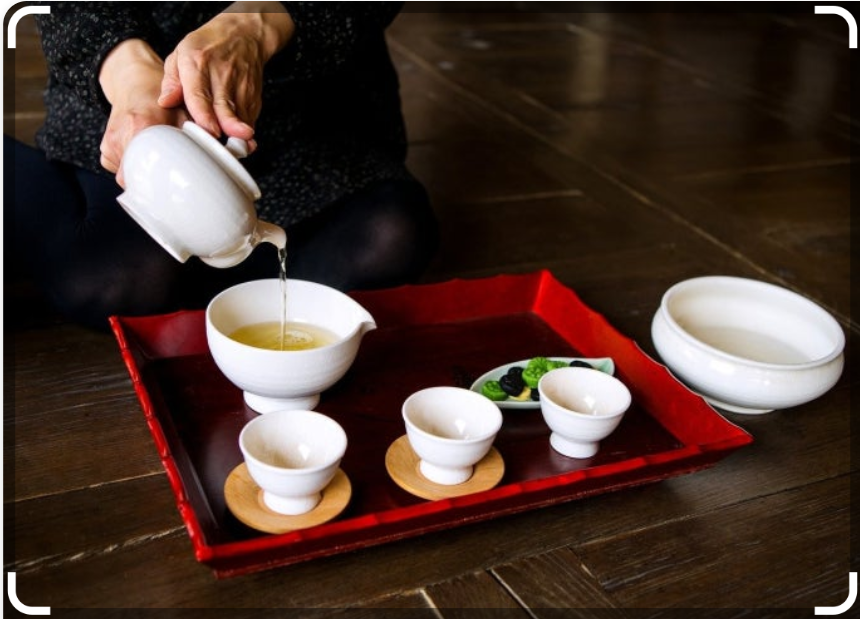
💬 Korean Traditional Tea Ceremony: Etiquette, Procedure & Useful Phrases
전통 다도를 체험할 때는 / ‘차를 마시는 것’ 자체보다 / 태도·자세·순서가 더 중요해.
When experiencing a traditional Korean tea ceremony, / the attitude, posture, and order matter more / than simply drinking the tea itself.
아래에 한국식 다도 기준으로, / 예절과 기본 절차를 단계별로 정리해봤어.
Below, based on Korean-style tea ceremony conventions, / I’ve organized the etiquette and basic procedure step by step.
Basic Mindset Before the Tea Ceremony
조용하고 차분한 분위기: / 다도 시간에는 불필요한 잡담·큰 웃음·휴대폰 사용을 줄이고, / 차의 향·색·맛에 집중하는 태도가 중요해.
A Quiet, Calm Atmosphere: During the tea ceremony, / it’s important to reduce unnecessary chatter, loud laughter, and phone use, / and focus your attention on the tea’s aroma, color, and taste.
몸가짐과 자세: / 바른 자세로 앉고, 등을 너무 구부리지 않고, / 손·발을 정돈해서 단정하게 앉는 것이 예절이야.
Posture and Bearing: Sitting with correct posture, not slouching too much, / and keeping your hands and feet tidy and composed is proper etiquette.
Sitting Posture and Greeting Etiquette
정좌 또는 차분한 좌식 자세: / 무릎을 꿇고 앉거나, 다리를 가지런히 모으고 앉아서 / 허리를 곧게 세우는 자세를 기본으로 해.
Formal or Calm Seated Posture: Kneeling, or sitting with your legs neatly together / and your back straight, is the basic posture.
시작 인사: / 차를 내리는 사람(주인·선생님)과 차를 마시는 사람(손님)이 / 서로 가볍게 목례하며 인사를 나누고 시작해.
Opening Greeting: The person preparing the tea (host/teacher) and the person drinking it (guest) / exchange a light bow as a greeting before beginning.
Basic Tea Set Preparation Procedure
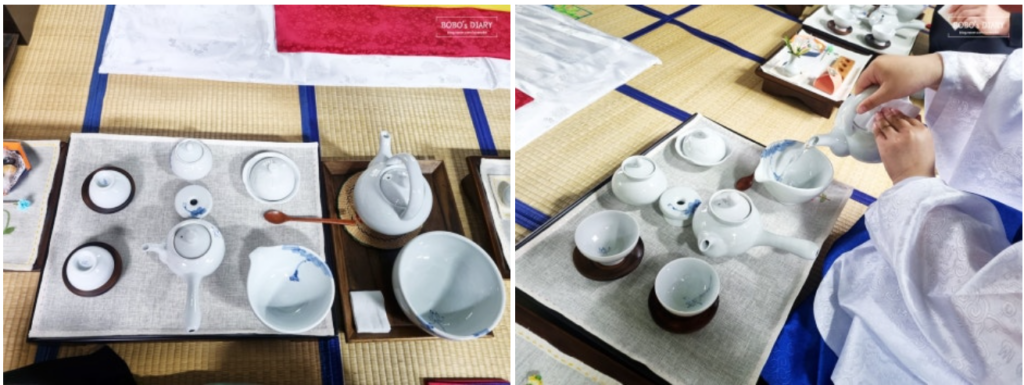
예절을 이해하려면 대략적인 순서를 알고 있으면 좋아.
To understand the etiquette, it helps to know the general order of steps.
다구·물·차 준비, 찻상 배열: / 차를 우리기 전에 다관, 찻잔, 숙우(식힐 그릇), 퇴수기, 다식 접시 등을 / 깨끗이 준비하고 자리에 가지런히 놓아.
Preparing the Tools, Water, and Tea; Arranging the Tea Table: Before brewing, / clean and neatly arrange the teapot, teacups, sukwoo (cooling bowl), waste-water bowl, and snack plate.
다관·찻잔 예열: / 끓인 물을 다관에 부어서 잠깐 데운 다음, / 그 물을 찻잔에 나누어 따라 다관·찻잔을 함께 따뜻하게 데워.
Warming the Teapot and Cups: Pour boiled water into the teapot to warm it briefly, / then pour that same water into the cups so both the pot and cups are warmed together.
물 식히기: / 끓인 물을 숙우에 옮겨 담아 잠깐 식혀서, / 차를 우리기에 알맞은 온도(약 60–70도 정도)가 되도록 해.
Cooling the Water: Transfer the boiled water into the sukwoo and let it cool briefly / to reach the ideal brewing temperature (around 60–70°C).
차잎 넣기: / 넓은 차숟가락으로 다관에 잎차를 적당량(2–3스푼 정도) 넣고, / 숙우의 식힌 물을 다관에 부어.
Adding the Tea Leaves: Use a wide tea spoon to add an appropriate amount of loose leaf tea (about 2–3 spoonfuls) to the pot, / then pour the water you cooled in the sukwoo into the pot.
찻잔의 물은 퇴수기에 버리기: / 예열을 위해 찻잔에 담아둔 물은 퇴수기에 버려 잔을 비워두고, / 차가 우러나기를 잠시 기다리며 다식(과자)을 준비해.
Discarding the Cup Water: Pour out the water used for warming the cups into the waste-water bowl, / and while waiting for the tea to steep, prepare the tea snacks (dasik).
차 나누어 따르기: / 차가 우러나면 다관의 차를 숙우에 한 번 옮겨 담아 농도를 고르게 맞춘 다음, / 거기서 여러 찻잔에 나누어 따라 맛과 농도가 고르게 섞이도록 해.
Pouring the Tea: Once steeped, pour the tea from the teapot into the sukwoo first to even out the strength, / then pour from the sukwoo into each cup so the flavor and strength are evenly distributed.
찻잔을 잔받침에 올려 연장자부터 권하기: / 찻잔을 잔받침에 올리고, 연장자 순으로 “드십시오”라고 말하며 / 목례 후 건네는 것이 기본 예절이야.
Serving the Eldest First: Place the cup on its saucer, / and serve in order of age, saying “please” (드십시오) with a light bow — this is basic etiquette.
Etiquette When Receiving Tea
두 손으로 받기: / 찻잔을 받을 때는 오른손으로 잔을 잡고 왼손으로 아래를 받쳐 / 두 손으로 공손하게 받는 것이 기본이야.
Receiving with Both Hands: When receiving the cup, / hold it with your right hand and support the bottom with your left, / receiving it politely with both hands.
잔을 들기 전에 감사 인사: / 차를 건네준 사람을 향해 가볍게 목례하거나 “감사합니다” 인사를 한 뒤 차를 들어.
A Word of Thanks Before Lifting the Cup: Give a light bow or say “thank you” (감사합니다) to the person who served you / before lifting the cup.
잔받침 사용: / 잔받침이 있을 경우, 찻잔은 잔받침 위에 올려두고, / 들 때는 두 손으로 잔을 들어 올려.
Using the Saucer: If there is a saucer, keep the cup resting on it, / and lift the cup with both hands when drinking.
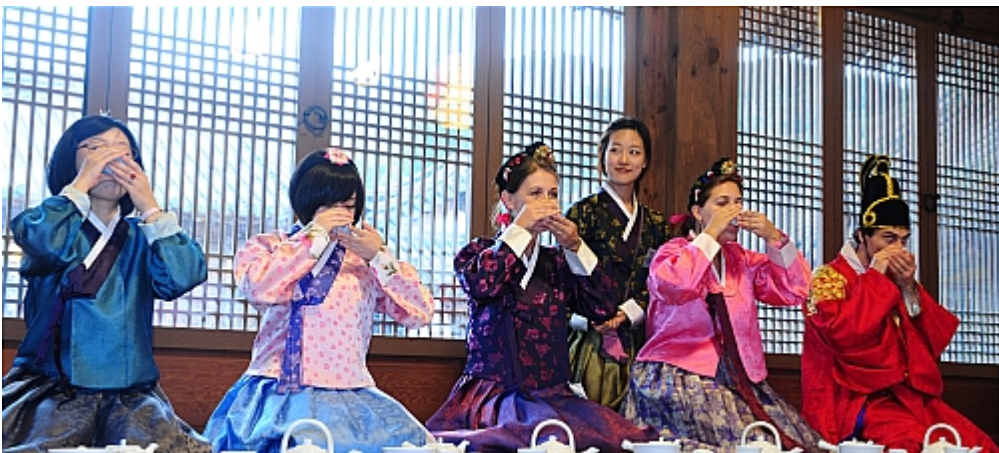
Etiquette While Drinking Tea
한국 다도에서 특별히 강조되는 부분들이야.
These are points that are especially emphasized in Korean tea ceremony.
소리 내지 않기: / 차를 마실 때 “후후” 소리를 내거나, 컵을 거칠게 내려놓지 않고 / 조용히 마시는 것이 예절이야.
No Slurping Sounds: Drinking quietly without blowing sounds / or setting the cup down harshly is proper etiquette.
너무 급하게 마시지 않기: / 한 번에 다 들이키지 않고, 작은 모금씩 2–3번 나누어 / 천천히 맛과 향을 음미해.
Not Drinking Too Quickly: Rather than gulping it down at once, / take 2–3 small sips and savor the taste and aroma slowly.
차수저 사용 주의: / 차수저는 저을 때만 사용하고, / 입에 넣거나 떠 마시는 데 사용하지 않아.
Care with the Tea Spoon: The tea spoon is only used for stirring — / not for putting in your mouth or scooping tea to drink.
입술 자국 처리: / 찻잔에 입술 자국이 남으면, / 마신 뒤 오른손으로 잔을 잡은 채 왼손 엄지와 검지로 잔 테두리를 살짝 닦아.
Handling Lip Marks: If lip marks are left on the cup, / hold the cup with your right hand and gently wipe the rim with your left thumb and index finger.
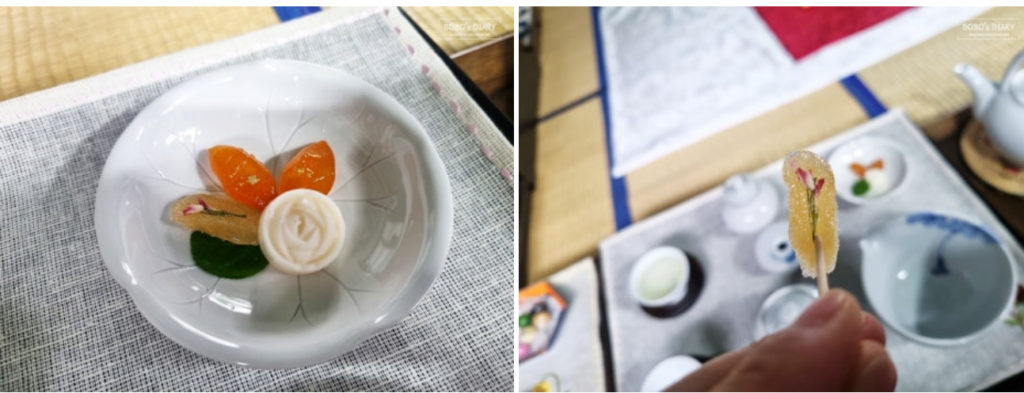
다과(다식) 먹는 방법: / 곁들인 다과는 한입 크기로 잘라 먹고, / 베어 물어서 크게 드러나게 먹지 않는 것이 단정한 예절이야.
How to Eat the Snacks (Dasik): Cut the accompanying snacks into bite-sized pieces, / rather than taking large, visible bites — this is considered neat and proper.
Speech and Attitude Etiquette
조용하고 차분한 대화: / 차를 마시는 동안에는 언성을 높이지 않고, / 남의 말을 끊지 않으며, / 잠깐 여유를 둔 후 말을 이어가는 태도를 지키는 것이 좋아.
Quiet, Calm Conversation: While drinking tea, avoid raising your voice, / don’t interrupt others, / and it’s good to leave a brief pause before continuing to speak.
상대 존중: / 눈을 너무 똑바로 응시하기보다 부드럽게 바라보고, / 손동작이나 몸을 너무 과하게 움직이지 않도록 조심해.
Respect for Others: Rather than staring directly, look gently, / and be careful not to move your hands or body too dramatically.
감사 표현: / 차를 내린 사람에게 “차가 정말 향이 좋네요”, “잘 마셨습니다” 등의 / 감사·감상 표현을 전하는 것도 예절의 일부야.
Expressing Gratitude: Offering the tea preparer comments like “The tea smells wonderful” or “Thank you for the tea,” / expressing thanks and appreciation, is also part of the etiquette.
팁: 차를 내어주는 사람을 부를 땐 “선생님” 또는 “호스트님”이라고 부르면 자연스러워 — 이름을 모를 땐 이 두 호칭 중 하나면 충분해.
Tip: When addressing the person serving the tea, “선생님” (teacher) or “호스트님” (host) works naturally — either is enough if you don’t know their name.
A Brief Comparison with Japanese Tea Ceremony (For Reference)
일본 다도에서는 말차를 마시기 전에 화과자를 먼저 먹고, / 찻잔을 시계 방향으로 2번 돌려서 입을 대고 마시는 작법이 일반적이야.
In Japanese tea ceremony, it’s common to eat wagashi (Japanese sweets) before drinking matcha, / and to turn the cup clockwise twice before drinking from it.
한국 다도에서는 찻잔을 돌리지 않고, / 잎차를 여러 모금으로 나눠 조용히 마시며, / 전체적으로 좀 더 생활적인 흐름으로 진행되는 경우가 많아.
In Korean tea ceremony, the cup is not turned; / loose leaf tea is drunk quietly in several sips, / and the overall flow tends to feel more like an everyday, natural experience.
Useful Phrases by Situation
다도 체험에서 쓰는 인사말은 / “처음 인사 – 차를 받을 때 – 마시면서 – 끝 인사” 흐름으로 정리하면 / 쓰기 쉽고 바로 활용할 수 있어.
Phrases used in a tea ceremony experience are easy to use / when organized in the flow of “opening greeting → receiving tea → while drinking → closing greeting.”
Opening Greetings
처음 만났을 때:
When First Meeting:
“안녕하세요, 오늘 다도 체험 잘 부탁드립니다.”
“Hello, thank you for having me for today’s tea ceremony experience.”
“이렇게 차를 배울 수 있는 자리를 마련해 주셔서 감사합니다.”
“Thank you for setting up this opportunity for me to learn about tea.”
“처음이라 많이 서투를 수 있지만, 잘 배우고 가겠습니다.”
“This is my first time, so I may be a bit clumsy, but I’ll do my best to learn.”
자리에 앉을 때:
When Sitting Down:
“잘 앉겠습니다. 편하게 앉아도 될까요?”
“I’ll sit now — is it okay to sit comfortably?”
“설명 잘 들으면서 차분하게 따라 해 보겠습니다.”
“I’ll listen carefully to the explanation and try to follow along calmly.”
“오늘 차 한 잔으로 좋은 시간을 나누고 싶습니다.”
“I hope to share a good time together over a cup of tea today.”
When Serving Tea (Host’s Perspective)
“한 잔 드셔 보시겠어요?”
“Would you like to try a cup?”
“천천히 차 향을 느끼면서 드셔 보세요.”
“Please take your time and enjoy the aroma as you drink.”
“오늘은 ○○차를 준비해 보았습니다. 향이 은은해서 편안하게 느끼실 거예요.”
“Today I’ve prepared ___ tea. It has a gentle aroma, so I think you’ll find it relaxing.”
찻잔을 건네며:
While Handing Over the Cup:
“드십시오.”
“Please, go ahead.”
“먼저 한 잔 맛보셔도 좋겠습니다.”
“Please feel free to try a cup first.”
“따뜻하니 조심해서 드세요.”
“It’s hot, so please be careful.”
Greetings When Receiving Tea (Guest’s Perspective)
“감사합니다, 잘 마시겠습니다.”
“Thank you, I’ll enjoy it.”
“정성껏 내 주셔서 감사합니다.”
“Thank you for preparing it with such care.”
“두 손으로 잔을 받겠습니다.”
“I’ll receive the cup with both hands.”
조금 더 공손하게 말하고 싶을 때:
For a More Formal Tone:
“귀한 차를 내 주셔서 정말 감사합니다.”
“Thank you so much for serving such a precious tea.”
“신경 써서 준비해 주셔서 감사드립니다.”
“I truly appreciate the care you put into preparing this.”
Before and While Drinking
첫 모금 전에:
Before the First Sip:
“향이 정말 좋네요.”
“The aroma is really wonderful.”
“색이 참 맑고 예쁩니다.”
“The color is so clear and beautiful.”
“먼저 향을 한번 맡아 보겠습니다.”
“Let me smell the aroma first.”
마시면서:
While Drinking:
“아주 부드럽고 따뜻한 맛입니다.”
“It has a very smooth and warm taste.”
“입안에 향이 오래 남아서 좋네요.”
“I like how the aroma lingers in my mouth.”
“몸이 편안해지는 느낌이 듭니다.”
“I feel my body relaxing.”
함께 있는 사람에게:
To Others Present:
“차 한 잔 하시면서 잠시 쉬어가요.”
“Let’s take a moment to rest with a cup of tea.”
“이렇게 같이 차를 마시니 더 여유가 생기는 것 같아요.”
“Drinking tea together like this really makes me feel more at ease.”
Receiving and Eating the Tea Snacks
“다과도 잘 먹겠습니다. 감사합니다.”
“Thank you, I’ll enjoy the snacks too.”
“차와 정말 잘 어울리는 맛이네요.”
“This pairs really well with the tea.”
“한입 크기로 나눠서 천천히 먹어 보겠습니다.”
“I’ll cut it into bite-sized pieces and eat it slowly.”
맛을 느낀 뒤:
After Tasting:
“달지 않고 고소해서 차와 같이 먹기 좋습니다.”
“It’s not too sweet and has a nutty flavor, so it goes well with the tea.”
“입안에 남는 맛이 부드럽고 은은하네요.”
“The lingering taste is soft and subtle.”
Expressions of Thanks and Appreciation During the Experience
진행 중에:
During the Experience:
“차 설명을 자세히 해 주셔서 이해가 잘 됩니다.”
“Thank you for explaining the tea in such detail — it really helps me understand.”
“차를 우리시는 모습이 정말 정갈하고 아름답습니다.”
“The way you brew the tea is so neat and beautiful.”
“한 잔 한 잔에 정성이 느껴집니다.”
“I can feel the care put into every single cup.”
조금 길게 감상 말하기:
For a Longer Reflection:
“차를 마시면서 마음이 차분해지는 경험을 하게 되어 좋습니다.”
“I really enjoyed experiencing how calm drinking tea makes me feel.”
“이런 시간을 통해서 일상에서 잠시 벗어나 쉬어갈 수 있는 것 같습니다.”
“Moments like this feel like a chance to step away from daily life and rest.”
Closing Greetings
체험이 끝날 때:
When the Experience Ends:
“오늘 차 덕분에 정말 좋은 시간을 보냈습니다. 감사합니다.”
“Thanks to the tea, I had a truly wonderful time today. Thank you.”
“정성스럽게 준비해 주셔서 몸과 마음이 다 편안해졌습니다.”
“Thanks to your careful preparation, I feel completely at ease, both in body and mind.”
“다도 예절까지 자세히 알려 주셔서 큰 공부가 되었습니다.”
“Learning the tea ceremony etiquette in such detail was very educational for me.”
작별 인사:
Farewell:
“다음에 또 이런 자리가 있으면 꼭 다시 참여하고 싶습니다.”
“If there’s another opportunity like this, I’d love to join again.”
“오늘 알려 주신 내용 잊지 않고, 집에서도 차를 천천히 즐겨 보겠습니다.”
“I won’t forget what I learned today, and I’ll try to enjoy tea slowly at home too.”
“바쁘실 텐데 시간을 내 주셔서 감사합니다. 좋은 하루 보내세요.”
“Thank you for taking the time despite being busy. Have a great day.”
Words Shared with Fellow Participants
“오늘 같이 차를 마셔서 더 즐거웠어요.”
“It was even more enjoyable having tea together today.”
“덕분에 많이 웃고, 좋은 이야기도 나눌 수 있었습니다.”
“Thanks to you, I laughed a lot and had some great conversations.”
“다음에 또 함께 다도 체험하러 오면 좋겠네요.”
“I hope we can come experience tea ceremony together again sometime.”
조금 더 분위기 있는 말:
For a More Atmospheric Tone:
“차 한 잔을 함께 나누는 시간이 이렇게 소중한 줄 새삼 느꼈습니다.”
“I realized once again just how precious it is to share a cup of tea together.”
“조용한 공간에서 서로 이야기 나누니 마음까지 따뜻해지는 것 같아요.”
“Talking together in such a quiet space seems to warm the heart too.”
Key Korean Expressions Summary
| 한국어 표현 | 영어 뜻 |
|---|---|
| 다구 | Tea utensils/tools |
| 다관 | Teapot |
| 숙우 | Cooling bowl (used to cool boiled water) |
| 퇴수기 | Waste-water bowl |
| 다식 | Traditional tea snack |
| 목례 | A light bow |
| 정좌 | Formal, upright seated posture |
| 잔받침 | Saucer |
| 여운 | Lingering aftertaste/aroma |
| 다도 | Tea ceremony |
Frequently Asked Questions
Do I have to kneel during a tea ceremony experience?
정좌가 기본이지만, / 불편하다면 다리를 가지런히 모으고 편하게 앉아도 괜찮은 경우가 많아. / 다만 자리에 앉기 전에 “편하게 앉아도 될까요?”라고 물어보는 게 좋아.
Formal kneeling is the traditional posture, / but if it’s uncomfortable, sitting with your legs neatly together is often acceptable. / It’s a good idea to ask “Is it okay to sit comfortably?” before you settle in.
Is it really rude to make noise while drinking tea?
네, 한국 다도에서는 조용히 마시는 걸 중요하게 여겨. / 후루룩 소리를 내거나 잔을 거칠게 내려놓는 건 피하는 게 좋아.
Yes, quiet drinking is considered important in Korean tea ceremony. / It’s best to avoid slurping sounds or setting the cup down harshly.
What’s the polite way to eat the tea snacks?
한입 크기로 잘라서 천천히 먹는 게 좋아. / 크게 베어 물어서 먹는 모습이 드러나지 않게 하는 게 단정한 예절이야.
It’s best to cut them into bite-sized pieces and eat slowly. / Avoiding large, visible bites is considered neat and proper etiquette.
Related Guides
👉 Korea Travel Routes: Hanok Stay Etiquette and Traditional Experiences in Jeonju
👉 Korea Travel Routes: Jeonju in 1 Night 2 Days or 2 Nights 3 Days
👉 More Korea Travel Guides