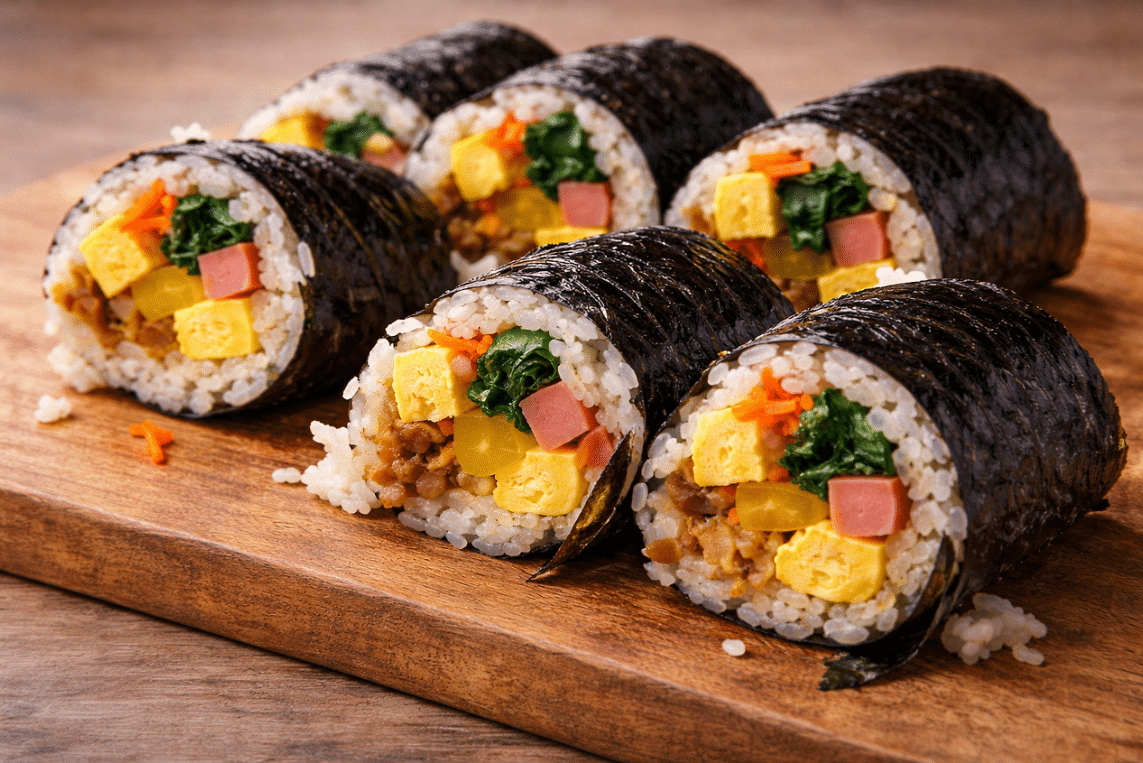
Why do Koreans have such famously radiant ‘Glass Skin’ and healthy ‘Longevity’?
Many believe the secret is found in the authentic ‘Korean Namul’, a side dish that is deeply connected to the unique culinary concept of ‘Sonn-mat’ (hand-taste).
In this guide, we will explore why ‘Korean Namul’ is more than just a simple vegetable dish—
it is a cultural masterpiece infused with the magic touch of ‘Sonn-mat’, which turns fresh ingredients into a soul-soothing, healthy meal for your daily life.
여러분이 어떤 야채를 선택하든,
(No matter which vegetable you choose,)
나물의 영혼은 바로 “손맛“에 있어요.
(the soul of Namul lies in “Sonn-mat”)
말 그대로 “손의 맛”이라고 번역되죠.
(literally translated as “hand-taste”).
한국에서는 그냥 숟가락으로 대충 젓지 않아요.
(In Korea, we don’t just stir with a spoon;)
우리는 양념을 부드럽게 조물조물 버무린답니다.
(we gently massage the seasonings)
손으로 야채 속까지 양념이 쏙쏙 배도록 말이죠.
(into the vegetables with our hands.)
우리가 먹는 모든 한 입 한 입마다 말이에요!
(into every single bite.)
이건 정말 아름답고, 정성이 들어가는 과정이에요.
(It’s a beautiful, mindful process)
사랑과 놀라운 풍미를 가득 불어넣어 주는,
(that infuses love—and incredible flavor—)
손맛 (Sonn-mat)
Hand-taste / The Magic Touch
- 이건 정말 아름다운 한국어 개념이에요.
- (This is a beautiful Korean concept.)
말 그대로 “손의 맛”을 뜻하지만,
(It literally means “hand-taste,”)
요리사의 개인적인 손길과 경험,
(but it refers to the unique, deep flavor)
그리고 사랑에서 나오는 깊은 풍미를 의미합니다.
(that comes from a cook’s personal touch, experience, and love.)
한국에서는 최고의 나물이 만들어진다고 믿는 답니다,
(In Korea, we believe the best Namul is made)
여러분이 양념을 부드럽게 조물조물 버무릴 때
(when you gently massage the seasonings)
맨손으로 야채 속까지 잘 배도록 말이죠!
(into the veggies with your bare hands!)
💡 What does “조물조물” mean?
- “조물조물” (Jomul-jomul) –
The Secret Korean Rhythm of Mixing
양념이 야채에 잘 베도록 손으로 힘을 주어 부드럽게 쥐었다 폈다 하며 버무리는 모양을 말해요.
English Description: This is a Korean onomatopoeia (의성어/의태어) that describes the rhythmic, gentle squeezing motion of your hands when mixing food.
How to understand it: It’s not just rough mixing! It means you are using light, affectionate pressure with your fingertips so the veggies absorb all the delicious flavors without getting crushed.
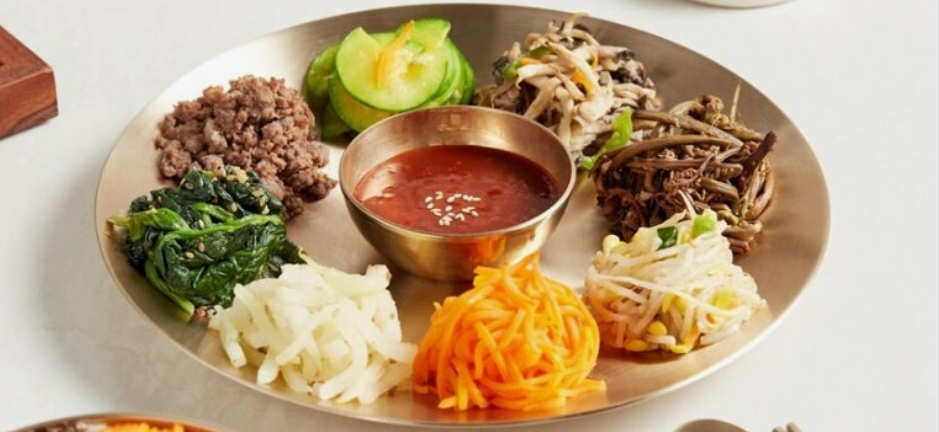
How to Level Up:
From Simple Side Dish to a Full Korean Meal
나물을 한 가득 만들어 두는 것은
(Making a big batch of Namul is)
한국 요리의 치트키를 쓰는 것과 같아요.
(like having a cheat code for Korean cooking.)
여러분은 단순히 간단한 반찬만 만드는 게 아니랍니다.
(You aren’t just making simple side dishes;)
한국에서 가장 유명한 두 가지 요리 걸작인
(you’ve basically prepared the core ingredients
for two of Korea’s most famous culinary masterpieces:)
비빔밥과 김밥의 핵심 재료를 이미 준비한 셈이거든요!
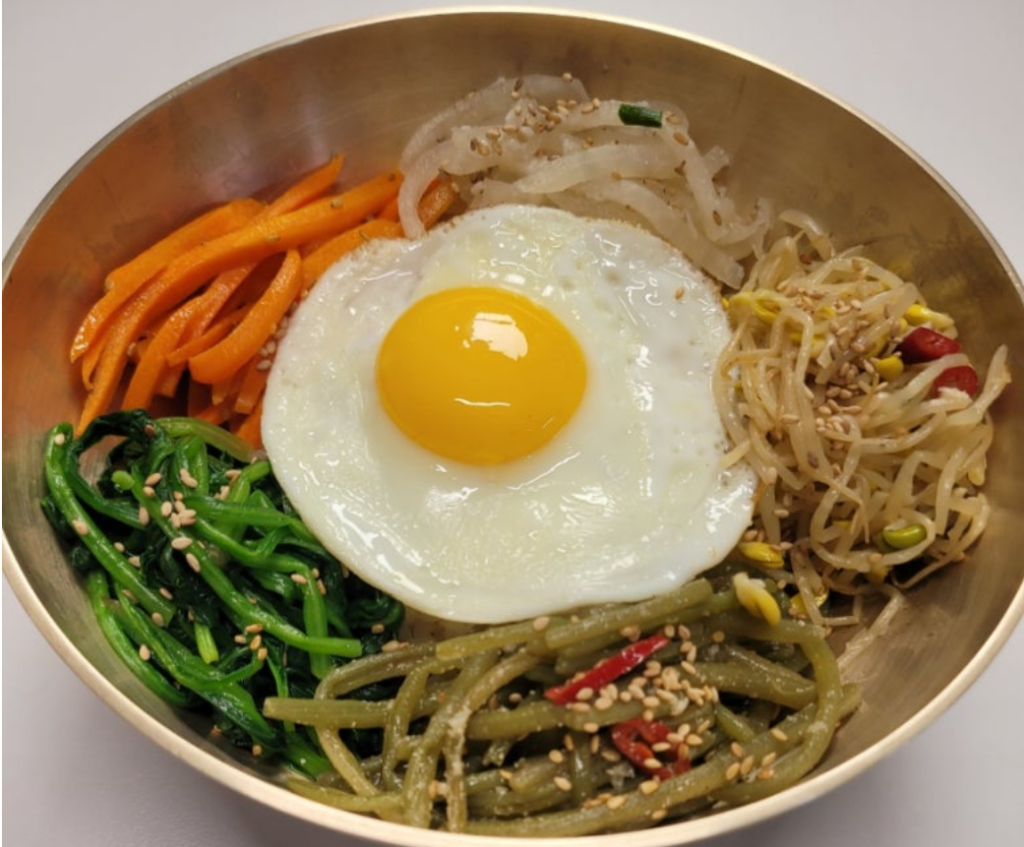
👑 1. The Quick & Comforting Masterpiece: Korean Namul Bibimbap
If you have warm rice and your fresh Namul ready, you are exactly 2 minutes away from a heavenly bowl of Bibimbap.
따뜻한 밥과 신선한 나물이 준비되어 있다면, 천국 같은 맛의 비빔밥 한 그릇을 완성하는 데 딱 2분밖에 걸리지 않아요.
- 대접에 따뜻한 밥을 푸고,
- (Simply scoop some warm rice into a bowl,)
- 직접 만든 시금치, 콩나물, 가지나물을 예쁘게 올려주세요.
- (arrange your homemade spinach, bean sprouts, and eggplant on top.)
계란 후라이(반숙이 최고예요!)를 하나 얹은 뒤,
(Add a fried egg—sunny-side up is best!—)
고추장 한 스푼과 고소한 참기름을 듬뿍 두르고
(and mix it all together with a dollop of Gochujang and a generous splash)
싹싹 비벼주면 끝입니다!
(of toasted sesame oil.)
Easy-to-do Bibimbap hint

| 간장 레시피 | recipe for soy sauce |
| 쪽파 60g (쫑쫑 썰기) (달래로 대신하면 더 맛나요) | 60g Green onions, finely chopped (It tastes even better if you use wild chives instead!) |
| 다진 홍고추 1개 (생략 가능) | 1 Finely minced red chili pepper (Optional) |
| 진간장 6T | 6 tbsp Dark soy sauce |
| 매실액 2T | 2 tbsp Plum extract (Plum syrup) |
| 고춧가루 1T | 1 tbsp Red pepper flakes (Gochugaru) |
| 멸치 액젓 2T (까나리액젓 가능) | 2 tbsp Anchovy fish sauce (Sand lance fish sauce works too!) |
| 설탕 1t | 1 tsp Sugar |
| 통깨 2T | 2 tbsp Toasted sesame seeds |
| 참기름 1T | 1 tbsp Sesame oil |
| 한국어 대사 & 한글 발음 기호 (Korean & Pronunciation) | 영어 해석 (English Translation) |
| 비빔밥 채소 이제 일일이 볶지 말고 한 번에 쪄 주세요. (Bi-bim-bap chae-so i-je il-il-i bok-ji mal-go han beon-e jjyeo ju-se-yo.) | Stop stir-frying your Bibimbap veggies one by one! Just steam them all at once. |
| 방법만 바꾸면 (Bang-beop-man ba-kku-myeon 쉽고 맛있게 자주 해 먹을 수 있어요. swip-go ma-sit-ge ja-ju hae meog-eul su it-eog-yo.) | Just by changing this one method, you can make it easily, deliciously, and way more often! |
| 좋아하는 채소 몇 가지만 준비해서 (Jo-a-ha-neun chae-so myeot ga-ji-man jun-bi-hae-seo 먹기 좋게 채 썰어 주세요. meok-gi jot-ge chae sseo-reo ju-se-yo.) | Grab a few of your favorite vegetables and shred them into bite-sized pieces. |
| 찜기에 물 한 컵 부어주고 (Jjim-gi-e mul han keop bu-eo-ju-go 채반에 채소 골고루 옮겨 담아 che-ban-e chae-so gol-go-ru om-gyeo dam-a 뚜껑 닫고 10분 동안 쪄 주세요. ttu-kkeong dat-go sip-bun dong-an jjyeo ju-se-yo.) | Pour a cup of water into the steamer, transfer the veggies evenly onto the steamer basket, close the lid, and let it steam for 10 minutes. |
| 그동안 본문에 있는 쪽파 많이 들어간 비빔밥 양념장, (Geu-dong-an bon-mun-e it-neun jjok-pa man-i deul-eo-gan bi-bim-bap yang-nyeom-jang, 이거 하나면 채소에 간 할 필요가 없어요. i-geo ha-na-myeon chae-so-e gan hal pil-yo-ga eop-seo-yo.) | Meanwhile, prepare the green onion-packed Bibimbap sauce (recipe in the description). With this sauce alone, you don’t even need to season the veggies! |
| 10분 후 흰쌀밥 위에 이쁘게 올려 담아 (Sip-bun hu hin-ssal-bap wi-e i-ppeu-ge ol-ryeo dam-a 계란, 양념장 취향껏 올려 비벼 먹으면 gye-ran, yang-nyeom-jang chwi-hyang-kkeot ol-ryeo bi-byeo meog-u-myeon 건강하고 담백하니 맛있는 비빔밥, 이제 편하게 준비하세요. geon-gang-ha-go dam-baek-ha-ni ma-si-neun bi-bim-bap, i-je pyeon-ha-ge jun-bi-ha-se-yo.) | After 10 minutes, arrange them beautifully over warm white rice. Top it with a fried egg and as much sauce as you like, then mix it up! Enjoy this healthy, light, and delicious Bibimbap—cooking it is so easy now. |
담백하다 (Dam-baek-ha-da) –
Light and Savory (Clean taste)
- 한국에서 정말 자주 쓰는 음식 표현이지만 영어로 번역하기는 조금 까다로워요.
- This is a very common food descriptor in Korea, but it’s hard to translate into English.
- 기름지지 않고 짜거나 맵지 않으며, 깔끔하고 담백한 맛을 말합니다.
- It describes a taste that is clean, light, not greasy, and not overly spicy or salty.
- 비빔밥 채소를 볶지 않고 찌면 맛이 엄청나게 담백해집니다.
- When you steam your veggies for Bibimbap instead of frying them, the taste becomes incredibly 담백하다.
비벼 먹다 (Bi-byeo meok-da) –
To Mix and Eat
여러분은 이미 비빔밥을 알고 있죠.
동사 비비다는 “섞다”, 먹다는 “eat”을 뜻해요.
You already know Bibimbap (Mixed Rice).
The verb 비비다 means “to mix” or “to rub,” and 먹다 means “to eat.”
이 둘을 합친 비벼 먹다는 음식을 한 입 먹기 전에 모든 재료를 싹싹 섞어서 먹는 행동을 말합니다.
When you combine them, 비벼 먹다 means the action of mixing everything together before taking a bite.
한국의 소울푸드를 즐기는 최고의 방법이죠!
It’s the ultimate way to enjoy Korean comfort food!
몸에 배어있다 (Mom-e bae-eo-it-da) –
To be Second Nature / Muscle Memory
- 김밥 영상에서 정셰프님이 김밥을 완벽하게 말면서 하신 말씀이죠!
- In the Kimbap video, Chef Jung says this while rolling it perfectly.
말 그대로 “몸에 스며들어 있다”는 뜻으로, 너무 많이 해봐서 몸이 기억하는 것(근육 기억)이나 제2의 천성 처럼 자연스러워진 것을 의미합니다.
- It literally means “soaked into the body,” which translates to muscle memory or something that has become second nature to you because you’ve done it so many times.
🍙 2. The Healthy, Grab-and-Go Perfection: Korean Namul Kimbap
도시락을 싸거나 이동하면서 먹고 싶나요?
Want to pack a lunch or eat on the move?
여러분의 나물은 한국의 대표적인 소풍 음식인 김밥으로 쉽게 변신할 수 있습니다.
Your Namul easily transforms into Kimbap (Korean Seaweed Rice Rolls), the ultimate Korean picnic food.
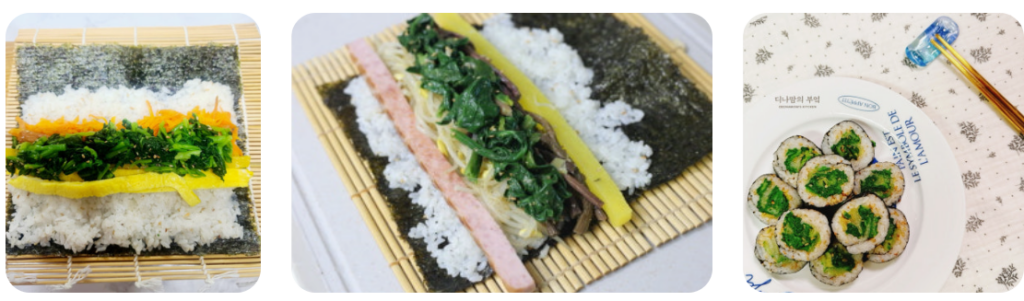
만드는 법: 김발 위에 김 한 장을 깔고, 양념한 따뜻한 밥을 얇고 고르게 펴줍니다.
How to Assemble: Place a sheet of dried seaweed (Gim) on a bamboo mat, and spread a thin, even layer of seasoned warm rice over it.
그 중심에 양념된 나물들을 나란히 올려주세요.
Line up your seasoned Namul vegetables right in the center.
단단하게 돌돌 말아준 뒤, 겉면에 참기름을 살짝 바르고 한 입 크기로 썰어냅니다.
Roll it up tightly, brush the outside with a bit of sesame oil, and slice it into bite-sized pieces.
알록달록하고 건강에도 좋으며, 들고 다니며 먹기에도 완벽하죠!
It’s colorful, healthy, and incredibly portable!
Easy-to-do Kimbap hint

| 한국어 대사 & 한글 발음 기호 (Korean & Pronunciation) | 영어 해석 (English Translation) |
| 김을 이렇게 놓고, 딱 한 주먹 가운데 딱 놔. (Gim-eul i-reo-ke no-go, ttak han ju-meok ga-un-de ttak nwa.) | Place the seaweed sheet like this, and put exactly one handful of rice right in the middle. |
| 밸런스가 맞게끔 최대한 얇게 펴줘, 그냥. (Bael-reon-seu-ga mat-gae-kkeum choe-dae-han yal-ge pyeo-jwo, geu-nyang.) | Spread it out as thinly as possible to keep it balanced. Just like that. |
| 이걸 빨리 펴야 밥을 빨리 쌀 수 있는 거지. (I-geol ppal-ri pyeo-ya bab-eul ppal-ri ssal su it-neun geo-ji.) | You have to spread this quickly so you can roll the kimbap fast. |
| 이 정도만 얇게 펼쳐도 돼요. (I jeong-do-man yal-ge pyeol-chyeo-do dwae-yo.) | Spreading it just about this thin is totally fine. |
| 단무지, 오이, 우엉, 당근, 햄, 맛살, 달걀지단 골고루. (Dan-mu-ji, o-i, u-eong, dang-geun, haem, mat-sal, dal-gyal-ji-dan gol-go-ru.) | Add the pickled radish, cucumber, burdock root, carrots, ham, crab sticks, and egg garnish evenly. |
| 여기서 이걸 잡아. 이걸로 계속 눌러줘, 그냥. (Yeo-gi-seo i-geol ja-ba. I-geol-ro gye-sok nul-reo-jwo, geu-nyang.) | Now, grab it from here. Keep pressing it down with your fingers. |
| 안 흐트러지게 잡아주면 되는 거예요. (An heu-teu-reo-ji-gae ja-ba-ju-myeon doe-neun geo-yae-yo.) | All you need to do is hold it tight so the ingredients don’t fall apart. |
| 그리고 이 손으로 최대한 잡아당기면서 싸주는 거죠, 팽팽하게. (Geu-ri-go i son-eu-ro choe-dae-han ja-ba-dang-gi-myeon-seo ssa-ju-neun geo-jyo, paeng-paeng-ha-ge.) | Then, use your other hand to pull it inward as much as possible while rolling it up tight. |
| 이렇게 해서… 자! 내가 싼 거. (I-reo-ke hae-seo… Ja! Nae-ga ssan geo.) | Do it like this and… Ta-da! Look at the one I rolled. |
| 이야~ 이건 모양이 확실히… 와아~ 이건 내가 너무 잘하는 것처럼 나오면 안 되는데. (I-ya~ i-geon mo-yang-i hwak-sil-hi… Wa-a~ i-geon nae-ga neo-mu jal-ha-neun geo-chyeo-rom na-o-myeon an doe-neun-de.) | Wow, the shape of this is definitely… Oh man, I shouldn’t make this look too easy. |
| 몸에 베어 있으니까 이거 어쩔 수 없는 거야. 어쩜 좋아, 이거? (Mom-e bae-eo-it-seu-ni-kka i-geo eo-jjeol su eop-neun geo-ya. Eo-jjeom jo-a, i-geo?) | But hey, it’s muscle memory at this point, so I can’t help it. What am I gonna do with all this talent? Haha. |