
Korean Shadowing is a powerful training method to master natural pronunciation and rhythm.
In today’s session, we’ll practice with an inspiring quote from Lee Sang-hwa.

⛸️ 이상화 선수의 현실 조언
Today, we’re going to master natural pronunciation and rhythm using an inspiring quote from Lee Sang-hwa.”
| 한국어 & 발음 기호 (Korean & Romanization) | 영어 해석 (English Translation) |
| 될 줄 알았어? ‘이 정도만 하면 됐겠지’ 이런 생각? (Doel jul arasseo? ‘I jeongdoman hamyeon dwaetgetji’ ireon saenggak?) | Did you think it would just happen? Thinking like, “This much should be enough”? |
| 아니? 스케이트는 이 정도라는 게 없어. (Ani? Seukeiteuneun i jeongdoraneun gae eopseo.) | No, there is no such thing as “enough” in skating. |
| 이 정도까지만 네가 하잖아? 넌 그냥 그 자리야. (I jeongdokajiman nega hajana? Neon geunyang geu jariya.) | If you only do up to this point, you’ll just stay in the exact same spot. |
| 물론 운동은 진짜 힘들어. 야, 진짜 얼마나 힘드냐. (Mullon undongeun jinjja himdeureo. Ya, jinjja eolmana himdeunya.) | Of course, training is really hard. Man, you have no idea how hard it is. |
| 그거 12바퀴 어떻게 타. (Geugeo yeoldubakwi eotteohge ta.) | How can anyone skate 12 laps like that? |
| 근데 그거를 해야 네 거가 되고, 그 스케이팅이 너의 업적이 되는 거야. (Geunde geugeoreul haeya ne geoga doego, geu seukeiting-i neoui eopjeogi doeneun geoya.) | But you have to push through it for it to become truly yours, and only then does that skating become your achievement. |
| 밥맛 좋게 운동해서는 안 돼. (Bammam jokhe undonghaeseoneun an dwae.) | You can’t just train comfortably with a good appetite. (meaning: You can’t train lazily without pushing your limits) |
“This Korean Shadowing practice is perfect for beginners.”
💡 Today’s Korean Lesson:
“(그 정도로) 될 줄 알았어?” vs ” (그 정도면) 될 줄 알았어?”
They look almost identical,
but changing just one tiny syllable—“~로” to “~면”—shifts the focus of the sentence.
Let’s break down this awesome nuance!
📋 The Subtle Difference in “그 정도” Questions
🔍 Deep Dive into the Nuances
Both sentences basically mean “Did you think it would just happen so easily?”, but here is the secret ingredient behind the particles:
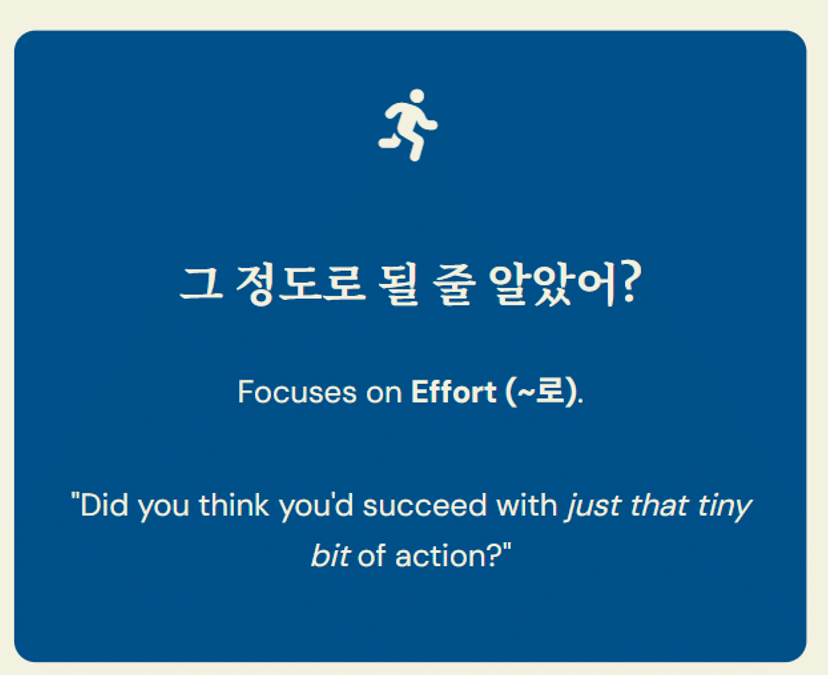
1. 그 정도로 (geu jeongdo-ro)
- The Secret: ~로 (ro) means “by means of” or “with”.
- The Vibe: It focuses heavily on the insufficient effort or action you put in. You are asking, “Did you really think you could achieve big goals using only that tiny bit of effort?” #### 2. 그 정도면 (geu jeongdo-myeon)
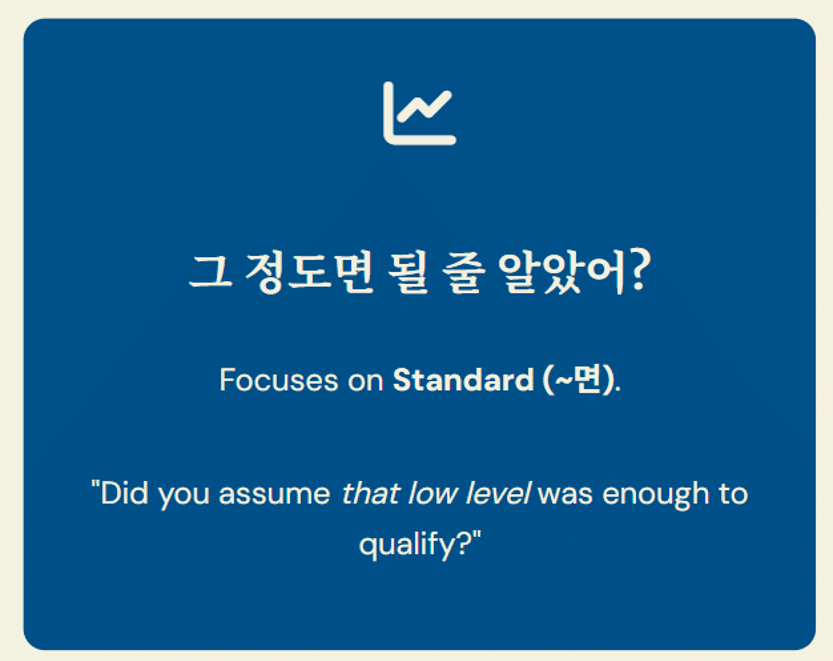
- The Secret: ~면 (myeon) means “if” or “when”. So 그 정도면 literally means “If it is at that level…”
- The Vibe: It focuses on the standard or baseline. You are challenging their judgment: “Did you think that low standard was enough to pass or succeed?”
🎯 Grammar Breakdown for Beginners
- 될 줄 알았어? (doel jul arasseo?) = Did you think it would happen? / Did you assume it would work?
- ~ㄹ 줄 알았다 is a grammar pattern used when you assumed or expected something to happen (but it usually didn’t turn out that way!).
💬 Bonus: How to use them with your friends (Playfully!)
You can use these phrases to tease your friends when they expect big results with zero effort!
- “공부 10분 하고 만점 맞기를 바래? 그 정도로 될 줄 알았어?” 😜(You studied for 10 minutes and expect a perfect score? Did you really think it would happen with that?)
💡 Today’s Korean Lesson: The Trap of “이 정도 (This Much)”
Hey guys! In today’s video, Olympic champion Lee Sang-hwa drops some serious truth bombs about mindset. She repeatedly uses a phrase that you absolutely need to know: “이 정도 (i jeongdo)”.
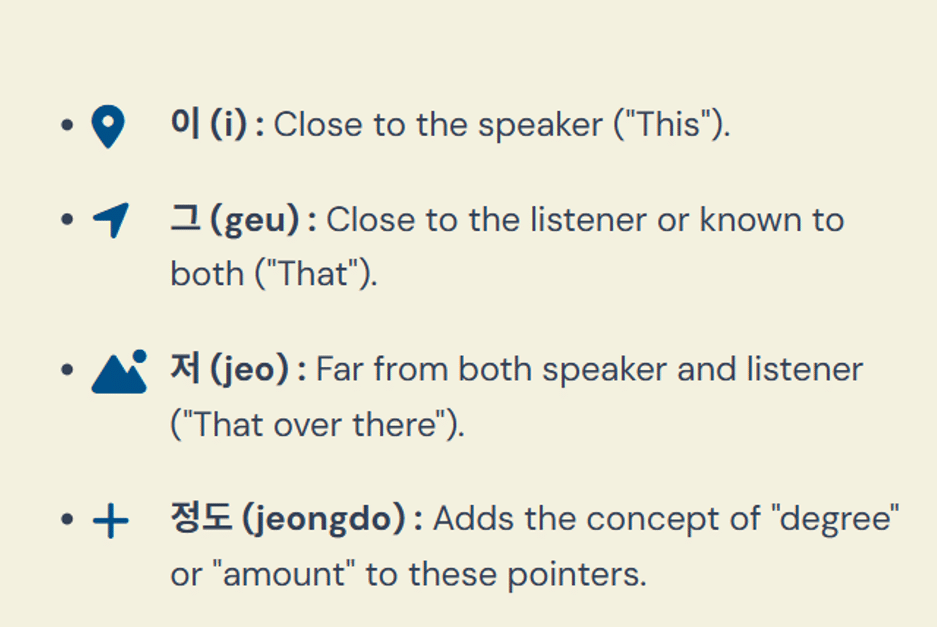
- 이 (i): This
- 정도 (jeongdo): Degree / Amount / Limit
So, “이 정도” means “this much” or “this level.” But depending on the tiny particles added to the end, the nuance changes completely! Let’s break down the 3 expressions she used to call out people who settle for mediocrity.
📋 Breakdown: The Three “이 정도” Expressions
Here is how Lee Sang-hwa used these expressions to talk about pushing your limits:
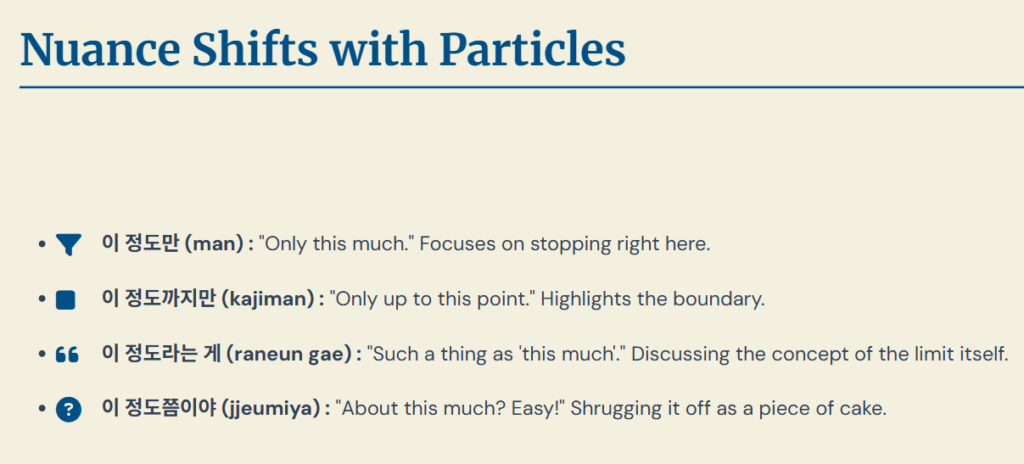

| 한국어 & 발음 기호 (Korean & Romanization) | 영어 해석 (English Translation) |
| 내 실력이 이 정도야. (nae sillyeogi i jeongdoya.) | This is how good I am. / This is my level. |
| 공부는 이 정도만 하면 됐어. (gongbuneun i jeongdoman hamyeon dwaesseo.) | I’ve studied enough. / This much studying is fine. |
| 이 정도쯤이야! (i jeongdojjeumiya!) | This is nothing! / A piece of cake! |
- “Recording yourself while doing Korean Shadowing helps you identify your pronunciation habits.”
🔍 Deep Dive into the Meanings
1. 내 실력이 이 정도야. (nae sillyeogi i jeongdoya.)
- When to use: Use this when you want to flex your skills playfully to your friends after doing something awesome!
- Nuance: It literally means “My skill is at this level,” showing a confident and proud vibe.
2. 공부는 이 정도만 하면 됐어. (gongbuneun i jeongdoman hamyeon dwaesseo.)
- When to use: When you’ve done enough studying for the day and are ready to close your books and relax.
- Nuance: Adding ~만 해도 됐어 means “Doing just this much is enough/done.”
3. 이 정도쯤이야! (i jeongdojjeumiya!)
- When to use: When someone asks if a task is too hard, and you want to say, “Pfft, I can totally handle this!”
- Nuance: The particle ~쯤 (about/around) combined with ~이야 creates a cool, breezy nuance like, “About this much level? It’s nothing to worry about!”
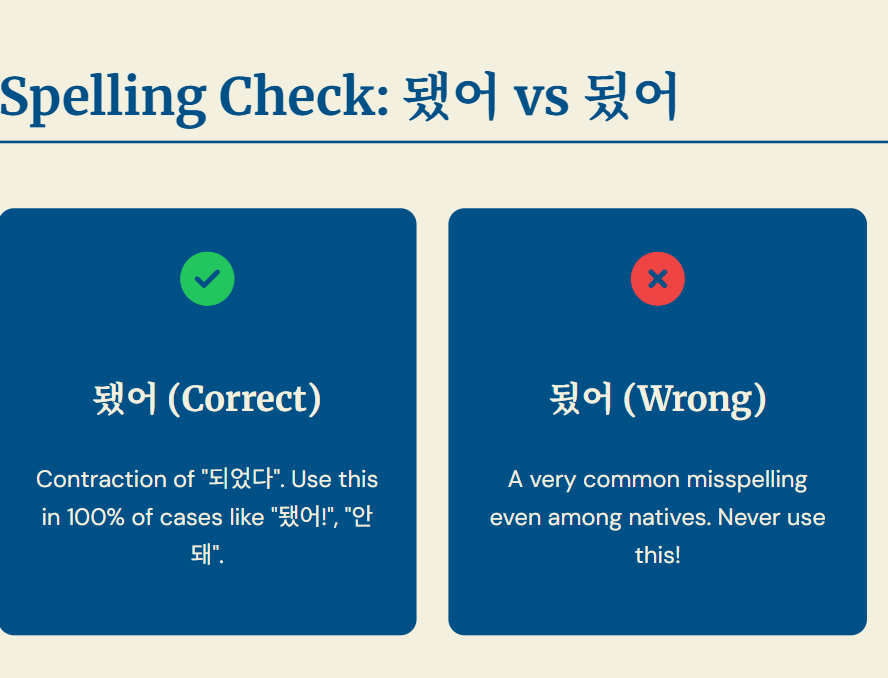
🎯 Korean Grammar Pointer: “됬어” vs “됐어”?
[Teacher’s Secret Note]
A lot of Korean learners (and even native Koreans!) get confused between 됬 and 됐.The correct spelling is always 됐어 (dwaesseo)!
Why? Because 됐 is a contraction of 되었 (doeo-eot).
So when you write your study logs or text your Korean friends, make sure to spell it: 됐어!
Clear and simple, right? 😉
💡 Quick Master: “저 정도” (That Level Way Over There)
Hey guys! We’ve already learned 이 정도 (this much – close to you) and 그 정도 (that much – close to the listener). Now, let’s look at the final piece of the puzzle: “저 정도 (jeo jeongdo)”.
In Korean, ‘저 (jeo)’ is used to point at something far away from both you and the listener (like “that over there”).
So, when you say “저 정도”, you are pointing at a person, an object, or a standard that is visually or psychologically at a distance, and comparing it to something else!
📋 “저 정도” English Comment & Examples
Here is how you can naturally explain and use this phrase in English:
| 한국어 표현 (Korean) | 영어 코멘트 / 해석 (English Comment & Translation) |
| 저 정도 (jeo jeongdo) | “That level over there” / “That much (at a distance)” → Refers to a person, object, or standard that is visibly or psychologically far away from both the speaker and the listener. |
| 저 정도는 돼야지! (jeo jeongdoneun dwaeyaji!) | It needs to be at least at that level (over there)! (Looking at an expert far away or on TV and setting them as the high standard). |
| 나 저 정도는 아냐. (na jeo jeongdoneun anya.) | I’m not that bad / I’m not at that extreme level. (Pointing out a far-off situation or person to distance yourself from them). |
🎯 Conversation Hack: The Visual Distance
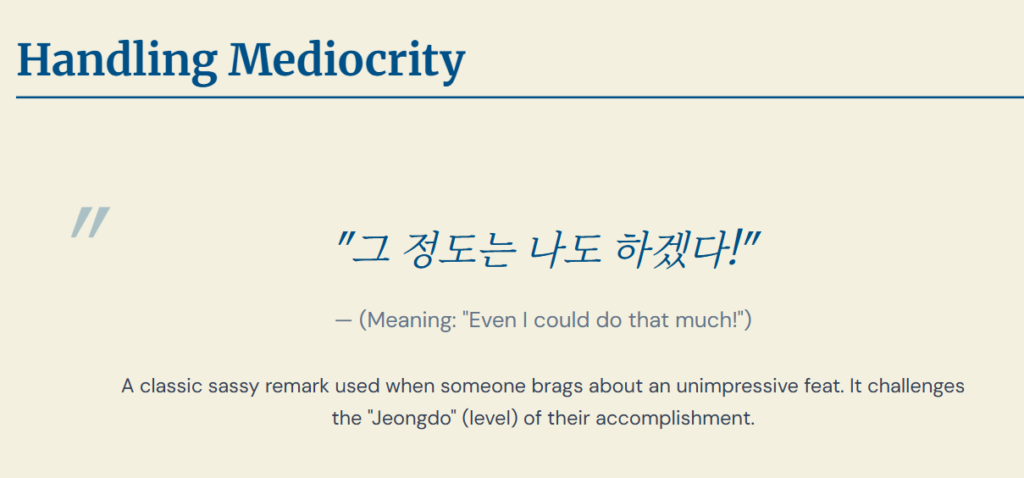
Imagine you are standing with a friend, looking at a master skater across the rink or a celebrity on a distant stage. When you point at them and say, “나도 저 정도는 하겠다!” (I could do at least that much too!), you are using ‘저’ because that standard is physically far away from both of you!
It’s important to practice the pronunciation first,
but think about when and why these words are used.
Since Lee Sang-hwa is speaking directly to her juniors,
her tone is very confident and bold.
Embodying that attitude will make your Korean Shadowing much more effective!”
“Can you think of a situation where you’d use this expression?
Let me know in the comments!”