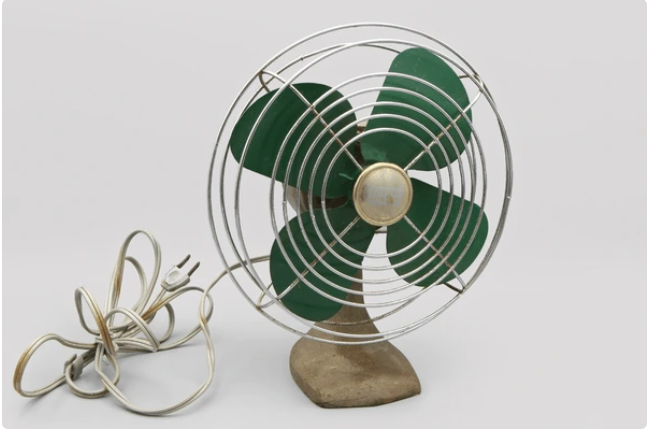
💬 The Fan That Started It All
한국어 캐주얼 표현을 제대로 쓰면 원어민처럼 들려.
Using Korean casual phrases correctly can make you sound like a native.
오피스 스토리로 한국어 배우기!
Learning Korean through office stories!
한국 여름은 덥고 습하기로 유명하지.
Korean summers are known for being hot and humid.
이런 무더운 여름날, / 집에서 10년 넘게 쓴 낡은 선풍기를 보면서 부부가 나누는 대화, / 일상에서 진짜 흔한 풍경이야.
On a sweltering summer day like this, / a conversation between a couple looking at an old fan they’ve used for over 10 years — / it’s a super common scene in daily life.
오늘은 이 부부의 대화를 통해서, / 선풍기랑 날씨 관련 여름 필수 단어들이랑 / 자연스러운 한국어 대화의 흐름까지 같이 익혀볼 거야.
Today, through this couple’s conversation, we’re going to learn essential summer vocabulary related to fans and weather, / as well as the flow of natural Korean conversation.
선풍기 소리가 뭔가 이상하다

Dialogue Script: The Fan Sounds a Bit Off
| 한국어 | 영어 해석 |
|---|---|
| 자기야 | Honey |
| 탁상용 선풍기 세일한다. | There’s a sale on desk fans. |
| 우리 이거 보내줘야 돼 이제 | We need to get rid of this one now. |
| 이거? | This one? |
| 그렇지 이게 소리가 좀 | Right, this sound is a bit… |
| 이륙해 이륙 | “It’s taking off! taking off!” |
| 부~앙 | (imitating the sound of an airplane taking off) |
| 이거 되게 예전 회사에서 썼던 거잖아 | We used this at our old company. |
| 어 이게 야근할 때 쓰기엔 오히려 좋은 게 | Actually, it’s pretty good for working overtime. |
| “내가 여기 있다” 이런 느낌이 딱 나거든 | It gives off a feeling like “I’m still here.” |
| 팀장이 막 엄청 힘들게 할 때도 탁 켜놓고 | When the team leader gives me a hard time, I turn it on. |
| 이것 좀 오늘 내로 좀 해주세요 정리 좀. 내일 아침까지 볼 수 있게 | “Please get this done by today, so I can see the summary by tomorrow morning.” |
| 네 | Yes. |
| 뭐 불만 있어요? | Do you have any complaints? |
| 아니요 | No. |
| 덥지 않으세요? | Aren’t you hot? |
| 오 무선도 있다 | Oh, there’s a wireless one too. |
| 아 이거 냉각 선풍기 급속 냉각되는 거 | Ah, this is a cooling fan, it cools quickly. |
| 제습기래. 옷장에 걸어 놓으면 되나 봐 | It’s a dehumidifier. I guess I can hang it in the closet. |
| 충전해 가지고 | After charging it. |
| 일단 이거 담고 그리고 아이스크림 할인한 거 담고 | First, put this in the cart, and the discounted ice cream too. |
| 진정해 진정해 | Calm down, calm down. |
| 담는 데 돈 안 들어 일단 담아 | It doesn’t cost money to add to the cart. Just add it. |
Summer Essential Words
| 한국어 | 영어 해석 |
|---|---|
| 덥다 | Hot |
| 습하다 | Humid |
| 무더운 여름 | Sweltering summer |
| 선풍기 | Electric fan |
| 탁상용 선풍기 | Desk fan |
| 무선 선풍기 | Wireless fan |
| 냉각 선풍기 | Cooling fan |
| 급속 냉각 | Rapid cooling |
| 제습기 | Dehumidifier |
| 아이스크림 | Ice cream |
The Magic Word: Understanding the Nuance of “좀”
한국어 대화를 듣다 보면 유독 많이 들리는 단어가 하나 있어. / 바로 “좀”이야.
When you listen to Korean conversations, there’s one word you’ll hear a lot: “좀.”
사전적으로는 ‘a little’이라는 뜻인데, / 실제로 원어민들은 이 단어를 훨씬 다채롭게 써.
Its dictionary meaning is ‘a little,’ / but native speakers actually use this word in much more diverse ways.
특히 “좀!”이라고 짧게 내뱉을 땐 / 화나거나 답답한 감정이 강하게 담겨 있고, / 부탁할 땐 상대를 배려해서 말을 부드럽게 만드는 쿠션 역할을 해.
Especially, when someone says just “좀!” sharply, / it carries strong emotions like anger or frustration. / But when making a request, it acts as a “cushion” to soften the tone and show consideration for the listener.
영어로는 상황에 따라 ‘Please’, ‘Just’, ‘Seriously’, ‘Come on’ 같은 걸로 번역되는데, / 한국어 “좀”처럼 이 모든 뉘앙스를 한 단어에 담기는 어려워.
In English, it can be translated as ‘Please’, ‘Just’, ‘Seriously’, or ‘Come on’ depending on context, / but it’s hard to capture all these nuances in a single word like the Korean “좀.”
오늘 살펴본 부부 대화 속에서 이 “좀”이 어떻게 쓰이는지 잘 살펴봐. / 한국어 회화 실력이 한 단계 더 자연스러워질 거야.
Pay close attention to how “좀” is used in the couple’s conversation we looked at today. / It’ll take your Korean conversational skills to the next level.
A Closer Look at the Nuances of “좀”
재밌는 건, 원어민들이 화났을 때 그냥 “좀!”이라고만 말해도 / 상대방은 맥락으로 그 의미를 완벽하게 알아듣는다는 거야.
What’s interesting is that even when native speakers just say “좀!” in anger, / the listener perfectly understands the meaning through context.
예를 들어 “좀 조심해”나 “좀 똑바로 해” 같은 문장에서 보듯이, / “좀”은 듣는 사람이 스스로 그 뒤에 숨은 의도랑 감정을 해석하게 만드는 마법 같은 단어야.
As you can see in phrases like “좀 조심해” (Be careful, please) or “좀 똑바로 해” (Seriously, do it right), / “좀” is a magical word that makes the listener interpret the hidden intention and emotion behind it on their own.
단어 하나가 문장의 온도랑 강도를 순식간에 바꿔버리는 거, / 진짜 신기하지 않아?
It’s fascinating how a single word can instantly change the temperature and intensity of a sentence, isn’t it?
| 표현 | 영어 뉘앙스 |
|---|---|
| “좀 조심해” | “Be careful, please!” |
| “좀 똑바로 해” | “Seriously, do it right!” |
| “좀 그만해” | “Come on! Just stop it!” |
| “좀!” | “Seriously! / Come on!” |
Key Korean Expressions
| 한국어 표현 | 영어 뜻 / 뉘앙스 |
|---|---|
| 좀 (부탁할 때) | Soft “cushion” word — “please,” softens a request |
| 좀! (화났을 때) | Sharp exclamation — “seriously!” / “come on!” / frustration |
| 야근하다 | To work overtime |
| 팀장 | Team leader |
| 진정해 | “Calm down” |
| 일단 담아 | “Just add it (to the cart) for now” — casual shopping phrase |
| 덥지 않으세요? | “Aren’t you hot?” — polite check-in question |
Frequently Asked Questions
How do I know if “좀” means “please” or shows frustration?
보통 요청하는 문장 안에 자연스럽게 들어가면 “please”에 가깝고, “좀!”처럼 짧고 강하게 혼자 튀어나오면 짜증이나 답답함을 나타내 — 억양과 맥락으로 구분해야 해.
When it’s woven naturally into a request, it’s closer to “please”; when it pops out short and sharp on its own like “좀!”, it signals frustration or annoyance — you have to read the tone and context to tell them apart.
Is “좀” only used in casual speech?
아니야, 존댓말에서도 자주 쓰여 — “이것 좀 해주세요”처럼 정중한 부탁에 부드러움을 더해줄 때도 흔히 등장해.
No, it’s used often in polite speech too — it commonly appears in polite requests like “이것 좀 해주세요” to add softness.
Why does the husband say the old fan is good for working overtime?
선풍기 소리가 커서, 아무도 없어도 “누가 있는 것 같은” 인기척을 만들어주기 때문에, 야근할 때 혼자 있다는 느낌을 덜어준다는 농담이야.
Because the fan’s loud sound creates the impression that someone’s around even when they’re alone, it’s a joke about how it makes working overtime alone feel a little less lonely.
💡 Key Expression Breakdowns
1. 뭐 불만 있어요? (Do you have any complaints?)
This is a direct, slightly playful yet firm question often used in office or daily settings when sensing someone’s hesitation or unspoken dissatisfaction.
- Vocabulary Breakdown:
- 뭐: Short for ‘무엇’ (what / something).
- 불만: Complaint, dissatisfaction, or discontent.
- 있어요?: Do you have…? (Polite tone).
- Nuance: Depending on the tone of voice, it can sound like a light teasing or a sharp boss checking in on an employee’s attitude.
2. 진정해, 진정해 (Calm down, calm down)
Used when someone gets overexcited, panicked, or starts acting impetuously (like adding too many items to an online shopping cart!).
- Grammar & Word Nuance:
- 진정하다: To calm down / to compose oneself.
- 진정해: Informal casual tone (반말) used between friends, spouses, or close peers.
- Daily Tip: Repeating it twice (진정해, 진정해) adds a friendly, reassuring, and lighthearted tone to tone down the excitement.
3. 담는 데 돈 안 들어, 일단 담아. (It doesn’t cost money to add to the cart. Just add it.)
A super common phrase used when shopping online!
- Grammar & Expression Breakdown:
- [Verb] + 는 데: “In doing [something]” or “The process of [verb].” (Here: 담는 데 = In adding to the cart).
- 돈 안 들어: Literally “Money doesn’t enter,” meaning “It doesn’t cost money.”
- 일단: First / for now / anyway.
- 담아: Put/add it in (casual form of 담다).
- Cultural Context: Korean online shoppers frequently say this when browsing online stores—reassuring themselves that adding items to a cart is completely free until checkout!
Related Lessons
👉 Korean Conversation: How to Ask a Question
👉 Korean Conversation: Tikita-ka
👉 More Conversation Lessons
Review Quiz: The Nuance of “좀”
(Answers are at the bottom.)
Part 1: Vocabulary Matching
Match each Korean word to its meaning.
- 야근하다
- 제습기
- 진정해
- 급속 냉각
- 팀장
A. Rapid cooling B. To work overtime C. Team leader D. Calm down E. Dehumidifier
Part 2: Fill in the Blank
Choose the correct word from the box.
Word box: 좀 / 무선 / 담아 / 덥지
- 이것 ( ) 해주세요. (please, softening a request)
- 오, ( ) 선풍기도 있네. (wireless)
- ( ) 않으세요? (aren’t you hot)
- 일단 이거 ( ). (add it to the cart)
Part 3: Comprehension Questions
Based on the dialogue, answer the following in English.
- Why does the husband say the old fan is actually good for working overtime?
- What two items does the wife say to add to the cart at the end?
- According to the passage, what are two very different emotions “좀” can carry depending on how it’s used?
Part 4: Short Answer (Open-Ended)
- 여러분은 부탁할 때 “좀”을 자연스럽게 쓸 수 있을 것 같아? 예문을 하나 만들어봐.
(Do you think you could use “좀” naturally when making a request? Try writing an example sentence.)
Answer Key
Part 1
1-B, 2-E, 3-D, 4-A, 5-C
Part 2
6. 좀
7. 무선
8. 덥지
9. 담아
Part 3
10. Because its loud sound gives the feeling that “someone is here,” which helps when working alone late at night.
11. The desk fan and the discounted ice cream.
12. As a soft “cushion” that makes a request more polite, or as a sharp exclamation showing anger or frustration.
Part 4 (sample answer)
13. Open-ended — check your own answer against the examples above.