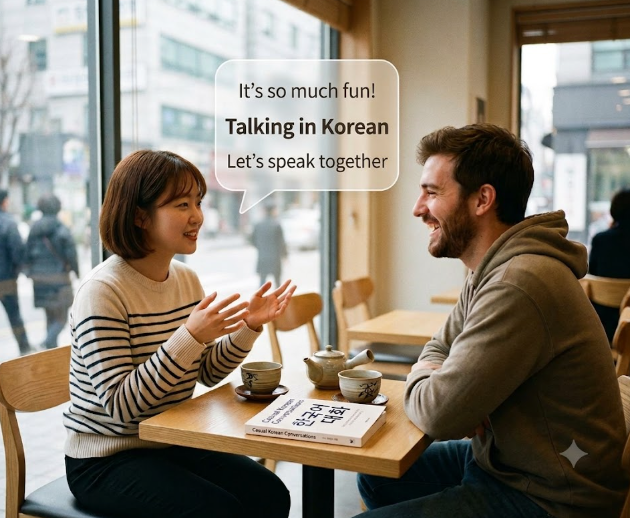
💬 Korean Conversation : How to Ask a Question
Dialogue Script: If I Really Fell for You, Then What Would You Do
| 한국어 대사 | 영어 해석 |
|---|---|
| 나 뭐 하나 물어봐도 돼요? | Can I ask you something? |
| 내가 누구랑 다르지 않다는 거예요? | What do you mean I’m not different from anyone else? |
| 아까 그 사람? 아니면 누구? | That person from before? Or who else? |
| 잊었나 본데 의미 없다고 한 건 너야. | You must have forgotten, but you were the one who said it was meaningless. |
| 부정하지 않은 건 네 말이 맞을 수도 있으니까 | I didn’t deny it because you might be right. |
| 그래서 너 아닌 사람들이랑 지내보려고 했던 거야 | That’s why I tried to spend time with people other than you. |
| 나도 궁금해서 내 마음이 너를 좋아하는 마음인 건지 아니면 그냥 사람이 고픈 건지… | I was curious, too. Whether my heart really likes you or if I’m just lonely… |
| 근데 아니면 어떡할래? | But what if it’s not? |
| 내 옆에 사람들이 많아져도 그래도 네가 좋고 | Even if I’m surrounded by people, I still like you. |
| 그래도 네가 보고 싶으면? | And even then, what if I still miss you? |
| 내가 정말 너한테 반한 거면 그러면 너 어떻게 할래? | If I have truly fallen for you, then what are you going to do? |
Subtext & Nuance: Indirect Questions in Korean Romance
한국어로 로맨틱한 대화를 할 때, 사람들은 “보고 싶어”나 “너한테 반했어”처럼 직접적으로 단정 짓는 말을 잘 안 해.
In Korean romantic conversations, people often refrain from making direct assertions like “I miss you” or “I fell for you.”
대신 “~면?”(What if…?)으로 끝나는 가정형 질문을 던져서 상대의 반응을 슬쩍 떠보는 방식을 자주 써.
Instead, they test the waters using hypothetical questions ending in “-면?” (What if…?).
“그래도 네가 보고 싶으면?” (And what if I still miss you?)
직역하면: “내가 보고 싶으면 어떡할래?”라는 뜻이야.
Direct meaning: “What if I miss you?”
실제 뉘앙스는: 이미 보고 싶다는 걸 은근히 고백하는 건데, 자존심을 지키면서 상대 반응도 살펴보려고 ‘가정’이라는 형태로 포장한 거야.
Actual nuance: “I’m subtly confessing that I already miss you, but I’m placing it as a ‘hypothetical’ to protect my pride and check how you feel.”
한국인들이 이렇게 말하는 이유는: “네가 보고 싶어”라고 직접 말하는 대신 조건형 “~면?”을 쓰면 고백이 훨씬 부드러워지거든. 그리고 대답의 부담을 상대에게 넘기게 돼 — “내가 이런 마음이면, 넌 어떻게 할 건데?”라는 식으로.
Why Koreans say this: Instead of saying directly “I miss you” (네가 보고 싶어), using the conditional “-면?” softens the confession. It shifts the burden of response to the listener: “If I feel this way, what are you going to do about it?”
“내가 정말 너한테 반한 거면? 그러면 너 어떻게 할래?” (If I have truly fallen for you, then what are you going to do?)
직역하면: “내가 반했다면, 너는 어떻게 할래?”라는 뜻이야.
Direct meaning: “If I fell for you, what will you do?”
실제 뉘앙스는: 마음을 고백하면서도 공을 상대한테 넘기는 거야 — “너 나 받아들일 준비 됐어?”라는 뜻이지.
Actual nuance: “I’m confessing my feelings, but I’m putting the ball in your court. Are you ready to accept me?”
한국인들이 이렇게 말하는 이유는: 이건 전형적인 ‘도발적인 고백’ 패턴이야. “너 어떻게 할래?”라고 물으면서, 화자는 그냥 감정을 표현하는 게 아니라 상대에게 확실한 대답이나 약속을 요구하고 있는 거야.
Why Koreans say this: This is a classic “challenging confession” (도발적인 고백) pattern. By asking “What are you going to do?” (너 어떻게 할래?), the speaker isn’t just expressing feelings — they are asking for a commitment or a clear response from the other person.
Key Takeaway for Learners
한국인들이 감정적이거나 로맨틱한 대화에서 “~면?”(What if…?)을 쓸 때는, 그게 진짜 단순한 가정형 질문인 경우는 거의 없어.
When Koreans use “~면?” (What if…?) during an emotional or romantic conversation, it is rarely just a hypothetical question.
보통은 질문으로 위장한, 부드럽고 간접적인 고백일 때가 많아!
It is usually a soft, indirect confession disguised as a question!
“어떻게” vs “어떡해” Explained
| Full Form | Shortened Form | English Meaning |
|---|---|---|
| 어떻게 해? | 어떡해? | What should I do? / How? |
| 어떻게 할래? | 어떡할래? | What are you going to do? |
궁금하지 않아? 이거 사실 거의 같은 말이야.
Do you know the difference? They’re essentially the same!
영어에서 줄임말 쓰는 거랑 똑같아. / “Do not”을 “Don’t”로 쓰듯이, / 한국인들은 “어떻게 해”를 줄여서 “어떡해”라고 말해.
Just like how we use contractions in English (e.g., “do not” → “don’t”), / Koreans use “어떡해” as a shortened version of “어떻게 해.”
“어떻게(how)”는 원래 문법적인 형태고,
“어떻게” (how) is the original, grammatical form.
“어떡해(what should I do?)”는 “어떻게 해”의 줄임말이야. / 걱정되거나 다음에 뭘 해야 할지 고민될 때 쓰면 돼!
“어떡해” (what should I do?) is a contraction of “어떻게 해.” / Use this when you’re worried or wondering what to do next!
“나 뭐 하나 물어봐도 돼요?” — When You Want to Ask the Other Person Something
“나 뭐 하나 물어봐도 돼요?”라는 말, 이렇게 바꿔 말할 수도 있어.
“Can I ask you something?” can also be expressed like this:
= 뭐 하나 물어봐도 돼요? = 뭐 좀 물어봐도 돼요? = 뭐 하나 물어볼께?
= 뭐 하나 물어봐도 돼요? = 뭐 좀 물어봐도 돼요? = 뭐 하나 물어볼께?
| 한국어 표현 | 영어 표현 | Features |
|---|---|---|
| 나 뭐 하나 물어봐도 돼? | Can I ask you something? | The most common, standard expression |
| 뭐 좀 물어봐도 될까? | Could I ask you something? | A bit more polite and softer |
| 뭐 좀 물어봐도 돼? | Can I ask you a question? | A classic way to ask for permission |
| 뭐 하나만 묻자. | Let me ask you something. | More casual and direct, used between friends |
| 질문 하나 해도 될까? | Do you mind if I ask you something? | More careful and polite phrasing |
이 표현들, 영어의 “go-to expression” 같은 거야. / 말할 때 편한 거 골라서 자연스럽게 써봐!
These phrases are like “go-to” expressions in English. / Feel free to use whichever one feels most natural for you to say out loud!
Real Conversation Tip: Cushion Language Before a Question
“나 뭐 하나 물어봐도 돼요?” 같은 질문 문형 외에도, / 무거운 질문을 꺼내기 전에 완충지대 역할을 해주는 표현을 알아두면 / 실전 대화에서 큰 도움이 돼.
Beyond question patterns like “나 뭐 하나 물어봐도 돼요?” (Can I ask you something?), / knowing a few “cushion” expressions that soften the space before a heavier question / makes a huge difference in real conversations.
| 한국어 표현 | 영어 뜻 |
|---|---|
| 딴 게 아니고… | It’s nothing else, but… |
| 솔직히 말해서… | To be honest… |
“딴 게 아니고”는 지금부터 하는 말이 별다른 의도가 있는 게 아니라는 걸 미리 알려주는 표현이야 — 본론으로 들어가기 전에 상대를 안심시켜줘.
“딴 게 아니고” signals upfront that what’s about to be said isn’t loaded with some other agenda — it puts the other person at ease before you get to the point.
“솔직히 말해서”는 지금부터 하는 말이 꾸밈없는 진심이라는 걸 강조할 때 써 — 민감한 질문이나 의견을 꺼내기 전에 자주 붙여.
“솔직히 말해서” emphasizes that what follows is unfiltered and genuine — it’s often added right before a sensitive question or opinion.
Breaking Down the Expression “사람이 고프다”
“좋아하는 마음인 건지 아니면 그냥 사람이 고픈 건지”에 나온 이 표현, / 한번 자세히 짚어볼게.
Let’s take a closer look at the expression “사람이 고프다,” / which appeared in “whether it’s really liking you, or if I’m just lonely.”
| 한국어 표현 | 영어 표현 | Features |
|---|---|---|
| 사람이 고프다. | I’m craving connection. | Used when you feel a deep, hunger-like need for someone’s presence |
| 외로워서 사람을 찾는다. | I’m starving for human touch. | Emphasizes intense loneliness; a physical-hunger-like longing for intimacy |
| 사람의 온기가 필요하다. | I’m longing for companionship. | A gentle, lingering, emotional longing |
어떤 걸 써야 할지 궁금하지?
Which one should you use?
“사람이 고프다”는 시적이고 감정이 깊게 담긴 표현이야. / 문자 그대로의 뜻에 너무 깊이 파고들려고 하지 마. / 몇 마디에 세상 모든 감정을 담는 영어 표현들처럼, / 이건 그 자체로 깊이 있는 한국어만의 관용구야. / 문법을 분석하기보다, 그 뒤에 담긴 감정을 그냥 느껴보는 게 제일 좋아.
“사람이 고프다” is a poetic, deeply emotional expression. / Don’t overthink its literal meaning too much. / Much like English phrases that carry a world of feeling in just a few words, / this is a uniquely Korean idiom that carries a certain depth. / It’s best to just feel the emotion behind it rather than analyzing the grammar too closely.
Key Korean Expressions
| 한국어 표현 | 영어 뜻 / 뉘앙스 |
|---|---|
| 뭐 하나 물어봐도 돼? | “Can I ask you something?” — used to start a question with someone |
| 뭐 하나만 묻자. | “Let me ask you something.” — a more casual version between friends |
| 어떡해 (= 어떻게 해) | “What should I do?” — a contraction used when you’re worried |
| 어떡할래 (= 어떻게 할래) | “What are you going to do?” |
| 반하다 | To fall for (someone) |
| 사람이 고프다 | To crave human connection / feel a “hunger” for someone’s presence |
| 온기가 필요하다 | To need warmth / companionship |
| 부정하지 않다 | To not deny (something) |
| 지내보다 | To try spending time (with someone) |
Frequently Asked Questions
What’s the difference between “어떻게” and “어떡해”?
“어떻게”는 원래 문법 형태로 “how”라는 뜻이고, “어떡해”는 “어떻게 해”를 줄인 구어체로 “뭘 해야 하지?”라는 뜻이야.
“어떻게” is the original grammatical form meaning “how,” while “어떡해” is a spoken contraction of “어떻게 해,” meaning “what should I do?”
Is “뭐 하나만 묻자” too casual to use with someone I just met?
응, 이건 친한 친구 사이에서 쓰는 표현이라, 처음 만난 사람한테는 “질문 하나 해도 될까요?”처럼 좀 더 부드러운 표현을 쓰는 게 좋아.
Yes, this phrase is for close friends, so with someone you just met, a softer phrase like “질문 하나 해도 될까?” is a better choice.
Why shouldn’t I take “사람이 고프다” too literally?
이건 실제로 배가 고프다는 뜻이 아니라, 외로워서 사람의 온기나 관계가 그립다는 감정을 표현하는 관용구야 — 그래서 문법보다는 느낌으로 받아들이는 게 자연스러워.
It’s not literally about being hungry — it’s an idiom expressing loneliness and a longing for human warmth or connection, so it’s more natural to absorb it as a feeling rather than parse it grammatically.
Related Lessons
👉 How to Type in Korean on Your Smartphone
👉 Korean Conversation: The Nuance of “좀”
👉 More Conversation Lessons
Review Quiz: How to Ask a Question
(Answers are at the bottom.)
Part 1: Vocabulary Matching
Match each Korean expression to its meaning.
- 반하다
- 사람이 고프다
- 온기가 필요하다
- 지내보다
- 부정하지 않다
A. To need warmth / companionship B. To try spending time (with someone) C. To fall for someone D. To not deny something E. To crave human connection
Part 2: Fill in the Blank
Choose the correct word from the box.
Word box: 어떡해 / 어떡할래 / 물어봐도 돼 / 사람이 고파서
- 나 뭐 하나 ( )?
(Can I ask you something?) - 시험을 망쳤어. 이제 ( )?
(What should I do?) - 네가 정말 좋아하는 게 아니라 그냥 ( ) 그런 걸 수도 있어.
(craving connection) - 내가 정말 반한 거면 너 ( )?
(What are you going to do?)
Part 3: Comprehension Questions
Based on the dialogue, answer the following questions in English.
- What is the relationship between “어떻게 해” and “어떡해”?
- List two other ways to say “Can I ask you something?” besides “나 뭐 하나 물어봐도 돼?”
- Why does the article suggest not overanalyzing “사람이 고프다” grammatically?
Part 4: Short Answer (Open-Ended)
Answer in Korean or English.
- 여러분은 친한 친구한테 질문할 때 어떤 표현을 제일 자주 써요?
(Which expression do you use most often when asking a close friend a question?)
Answer Key
Part 1
1-C, 2-E, 3-A, 4-B, 5-D
Part 2
6. 물어봐도 돼
7. 어떡해
8. 사람이 고파서
9. 어떡할래
Part 3
10. “어떡해” is a spoken contraction of “어떻게 해,” the same way “don’t” is a contraction of “do not” in English.
11. Any two of: 뭐 좀 물어봐도 될까?, 뭐 좀 물어봐도 돼?, 뭐 하나만 묻자., 질문 하나 해도 될까?
12. Because it’s a poetic, emotionally loaded idiom about loneliness and craving connection — the feeling behind it matters more than a literal, word-by-word breakdown.
Part 4 (sample answer)
13. Open-ended — personal reflection.