💬 Korean Conversation: Getting Married & Expressing Frustration
이번 글에서는 다섯 살 연하남과 연애 중인 한 여성의 이야기를 통해 / 결혼에 대한 조급함, 그리고 그 마음을 표현하는 한국어 표현들을 배워볼 거야.
In this post, we’ll follow the story of a woman dating a man five years younger than her, and learn Korean expressions for feeling rushed about marriage — and how to express that frustration.
The Story: A Five-Year-Younger Boyfriend, and the Question of Marriage
저는 지금 다섯 살 연하인 남자친구와 연애를 하고 있습니다.
I am currently dating a boyfriend who is five years younger than me.
연애는 행복하지만, 어느새 제 나이도 30대가 되다 보니 문득 결혼에 대한 조급함이 밀려오기 시작했습니다.
The relationship is happy, but now that I’ve somehow reached my 30s, a sense of urgency about marriage has started creeping in.
어느 날, 용기를 내어 제 마음을 솔직하게 털어놓았습니다.
One day, I gathered my courage and honestly shared what was on my mind.
“나 요즘 결혼 생각을 자주 하게 돼. 나이가 있다 보니까 괜히 마음이 급해지는 것 같아.”
“I’ve been thinking about marriage a lot lately. Since I’m getting older, I guess I just feel rushed for no real reason.”
남자친구는 잠시 제 이야기를 듣더니 조용히 대답했습니다.
My boyfriend listened for a moment, then quietly answered.
“나도 당연히 너랑 결혼할 생각은 있어. 그런데 지금은 일이 너무 바빠. 정신도 없고, 아직은 여유가 없어.”
“Of course I plan on marrying you too. But work is just too busy right now. I’m swamped, and I don’t have room to breathe yet.”
그 말을 듣고는 이해하려고 했지만, 마음 한편은 쉽게 편해지지 않았습니다.
I tried to understand, but part of me still couldn’t quite settle down.
그때 갑자기 남자친구가 제 손을 잡으며 말했습니다.
Just then, my boyfriend suddenly grabbed my hand and said,
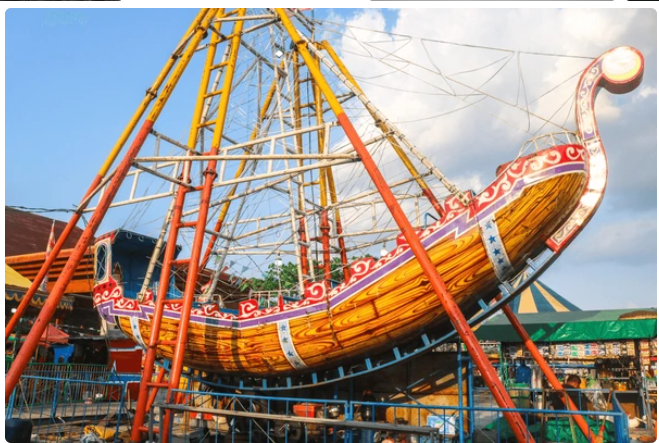
“저기 봐! 바이킹 타러 갈래? 줄도 별로 없는데.”
“Look over there! Want to ride the Viking ship? There’s barely any line.”
갑작스러운 제안에 저도 웃으며 대답했습니다.
Caught off guard by the sudden suggestion, I laughed and answered.
“그래. 줄 서자. 대신 아까 하던 얘기 계속해 줘.”
“Sure. Let’s get in line. But keep talking about what you were saying earlier.”
바이킹 줄을 서 있는 동안 다시 조심스럽게 말을 꺼냈습니다.
While waiting in line, I carefully brought it up again.
“나는 지금 당장 결혼하자고 재촉하는 게 아니야. 그냥 내 마음이…”
“I’m not saying we should get married right this second. It’s just that the way I feel is…”
그 순간 직원이 크게 외쳤습니다.
Right at that moment, a staff member called out loudly.
“다음 팀 들어오세요!”
“Next group, come on in!”
남자친구는 급하게 제 손을 끌며 말했습니다.
My boyfriend hurriedly pulled me by the hand and said,
“자기야, 우리 차례야! 중간에 앉을래? 끝에 앉을래?”
“Honey, it’s our turn! Do you want to sit in the middle or at the end?”
갑자기 분위기가 바뀌어 저도 웃음이 나왔습니다.
The mood shifted so suddenly that I ended up laughing too.
“응? 중간? 그래, 중간에 앉자.”
“Huh? The middle? Okay, let’s sit in the middle.”
남자친구는 제 표정을 보며 장난스럽게 웃었습니다.
My boyfriend looked at my face and grinned playfully.
“무서운 거지? 역시 우리 자기 귀엽다.”
“You’re scared, right? You’re just so cute.”
결국 결혼 이야기는 바이킹이 끝날 때까지 이어지지 못했습니다.
In the end, the marriage conversation never got to continue until the ride was over.
바이킹이 올라갔다가 떨어질 때마다 제 속도 함께 뒤집히는 것 같았습니다.
Every time the ship swung up and dropped, it felt like my insides were flipping right along with it.
‘내 마음은 이렇게 복잡한데… 저 사람은 왜 이렇게 태평한 걸까.’
“My feelings are so complicated right now… why is he so carefree?”
놀이기구에서 내린 뒤에도 남자친구는 아무 일 없었다는 듯 웃고 있었고, 저는 속으로만 생각했습니다.
Even after we got off the ride, my boyfriend was still smiling like nothing had happened, while I just kept thinking to myself.
‘정말 속이 썩는다… 가끔은 한 대 콩 하고 싶을 정도야.’
“My insides are really rotting right now… sometimes I just want to give him a little konk on the head.”
물론 진심은 아닙니다.
Of course, I don’t really mean it.
하지만 결혼을 기다리는 사람이라면, 저처럼 한 번쯤은 이런 답답한 마음을 느껴봤을지도 모르겠습니다.
But if you’re someone waiting for marriage, you may have felt this same kind of frustration at least once, just like I did.
Word Focus: Breaking Down the Harder Words
연하남
A man younger than you (in a romantic context) — “연하” means “younger,” and “남” means “man.” The female equivalent is “연하녀.”
조급함
A sense of urgency or impatience — often used for feeling rushed about a life milestone like marriage, without a specific deadline forcing it.
밀려오다
Literally “to come pushing in,” used for a feeling or emotion that gradually builds up and washes over you, like a wave.
태평하다
To be carefree or unbothered, sometimes with a hint of “too relaxed for the situation” — used here to describe the boyfriend’s calm reaction while the narrator is anxious.
답답하다
To feel frustrated, stifled, or suffocated by a situation — a very common word for everyday frustration, not just anger.
속이 썩다
Literally “my insides are rotting” — an idiom for deep frustration caused by someone you love (see the Cultural Insight section below).
콩 하다
A playful, affectionate way of saying “to give someone a little bonk/tap” — usually on the head, as a joking gesture of mock annoyance, not real violence.
Cultural Insight: Why Do We Say “My Heart Is Rotting”? (“내 속이 썩어”)
한국어에서는 가까운 누군가 때문에 깊이 좌절하거나 스트레스받을 때 “속이 썩는다”(my insides are rotting)라는 표현을 써 — 보통 연인, 자녀, 친구를 두고 하는 말이야.
In Korean, we use the phrase “속이 썩는다” (my insides are rotting) when we are deeply frustrated or stressed because of someone close to us — usually a partner, a child, or a friend.
논리: 낯선 사람한테는 이런 감정을 안 느껴. 왜냐고? 그 사람한테 기대하는 게 전혀 없으니까. ‘썩는’ 느낌은 사랑하는 사람에게 큰 기대를 걸 때만 느낄 수 있어.
The logic: You don’t feel this way toward strangers. Why? Because you have zero expectations for them. You can only feel “rotting” when you have high expectations for the person you love.
맥락: “내 인내심이 바닥나고 있어”나 “너 때문에 감정적으로 지쳤어”를 아주 강렬하게 표현하는 방식이야.
Context: It’s a very visceral way of saying, “My patience is wearing thin” or “I’m emotionally exhausted because of you.”
💡 Korean Grammar & Expression Guide
1. Grammar Pattern: ~다 보니까 (Because one keeps doing…)
“나이가 있다 보니까 괜히 마음이 급해지는 것 같아”에서, “~다 보니까”는 계속되는 상태나 행동의 결과로 자연스럽게 어떤 결론에 이르렀다는 걸 나타내.
In “나이가 있다 보니까 괜히 마음이 급해지는 것 같아” (Since I’m getting older, I guess I just feel rushed), “~다 보니까” expresses a result that naturally follows from a continuous state or action.
- Pattern: Verb/Adjective stem + ~다 보니까
- 계속 연습하다 보니까 자연스러워졌어요. (As I kept practicing, it became natural.)
- 혼자 살다 보니까 요리를 잘하게 되었어요. (Living alone led me to get good at cooking.)
2. Register Note: Formal Narration, Casual Dialogue
이 스토리는 존댓말로 서술되지만, 실제로 주고받은 대화는 전부 반말이야. 이건 한국어 글쓰기에서 아주 흔한 패턴이야 — 화자가 자기 이야기를 설명할 땐 존댓말을, 실제 대화 속 말투는 반말 그대로 인용하는 거지.
This story is narrated in polite speech (존댓말), but the actual dialogue quoted inside it is entirely in casual speech (반말). This is a very common pattern in Korean writing — the narrator explains their own story politely, while quoting the real conversation exactly as it was spoken, in casual tone.
3. Essential Spoken Phrase: 재촉하다 vs 화제를 돌리다
재촉하다 (to rush/pressure someone): 결혼을 재촉하는 게 아니야. (I’m not pressuring you about marriage.)
To rush or pressure someone into doing something sooner.
화제를 돌리다 (to change the subject): 남자친구가 갑자기 화제를 돌렸어. (My boyfriend suddenly changed the subject.)
To shift the conversation to a different topic, often to avoid an uncomfortable one.
Key Korean Expressions Summary
| 한국어 | 영어 뜻 |
|---|---|
| 연하남 | Younger boyfriend/man |
| 조급함 | A sense of urgency |
| 밀려오다 | To come washing over (a feeling) |
| 태평하다 | To be carefree / unbothered |
| 답답하다 | To feel frustrated / stifled |
| 속이 썩다 | To be deeply frustrated by someone you love |
| 콩 하다 | To playfully bonk/tap someone |
| 재촉하다 | To rush / pressure someone |
| 화제를 돌리다 | To change the subject |
Frequently Asked Questions
Why does the woman feel “조급함” (urgency) about marriage?
서른 살대라는 나이 자체가 결혼에 대한 조급한 마음을 갖게 만든 거야 — 나이 때문에 시간이 얼마 없다고 느끼는 거지.
Simply being in her 30s made her feel a sense of urgency about marriage — she feels like time is limited because of her age.
Is “속이 썩는다” ever used toward a stranger?
아니, 이 표현은 기대할 게 전혀 없는 낯선 사람한테는 안 써 — 사랑하는 사람한테 큰 기대를 걸었을 때만 느낄 수 있는 감정이야.
No, this expression isn’t used toward strangers, since you have no expectations for them — it’s a feeling you can only have toward someone you love and have high expectations for.
Why did the boyfriend suggest riding the Viking ship in the middle of the conversation?
결혼 얘기가 불편해서 화제를 돌리려고 한 걸 수도 있고, 정말 순수하게 놀이기구를 타고 싶었을 수도 있어 — 이 스토리는 일부러 그 답을 확실하게 안 알려줘.
He might have suggested it to change the subject away from an uncomfortable topic, or he might have genuinely just wanted to ride it — the story intentionally leaves this a little ambiguous.
Review Quiz: Getting Married
(정답은 맨 아래에 있어요.)
(Answers are at the bottom.)
Part 1: Vocabulary Matching
Match each Korean word to its meaning.
- 조급함
- 태평하다
- 재촉하다
- 속이 썩다
A. To be deeply frustrated by someone you love
B. A sense of urgency
C. To rush/pressure someone
D. To be carefree / unbothered
Part 2: Fill in the Blank
Word box: 밀려오기 / 콩 / 화제를 / 답답한
- 어느새 제 나이도 30대가 되다 보니 결혼에 대한 조급함이 ( ) 시작했습니다. (came washing over)
- 남자친구가 갑자기 바이킹을 타자며 ( ) 돌렸습니다. (changed the subject)
- 가끔은 한 대 ( ) 하고 싶을 정도야. (playful bonk)
- 저는 한 번쯤은 이런 ( ) 마음을 느껴봤을지도 모르겠습니다. (frustrated)
Part 3: Comprehension Questions
Based on the story, answer in English.
- Why does the woman feel a sense of urgency about getting married?
- How does the man respond when she brings up marriage, and what does he suggest instead?
- According to the passage, why is “속이 썩는다” only used toward people you’re close to, not strangers?
Part 4: Short Answer (Open-Ended)
- 여러분은 누군가 때문에 “속이 썩는” 것 같았던 경험이 있나요?
(Have you ever had an experience where someone made your “insides rot,” so to speak?)
Answer Key
Part 1
1-B, 2-D, 3-C, 4-A
Part 2
5. 밀려오기 6. 화제를 7. 콩 8. 답답한
Part 3
9. Because she’s in her 30s, and her age makes her feel like time for marriage is running out. 10. He avoids the topic by suggesting they go ride the Viking ship instead, changing the subject.
11. Because you only feel that kind of frustration toward someone you have high expectations for — and you have zero expectations for a stranger.
Part 4 (sample answer)
12. Open-ended — personal reflection.